
When using enteral feeding supplies, consistent cleaning and maintenance are key to protecting your health and ensuring accurate nutrition. Learn more about how to clean, maintain, and when to replace enteral feeding equipment.
Checkout using your account
Checkout as a new customer
Creating an account has many benefits:
When using enteral feeding supplies, consistent cleaning and maintenance are key to protecting your health and ensuring accurate nutrition. Learn more about how to clean, maintain, and when to replace enteral feeding equipment.

TLDR: Hidden medical supply costs often come from avoidable waste, inconsistent ordering, rush shipping, and staff time spent fixing purchasing problems. Private practices can protect margins by standardizing common-use items, tightening reorder habits, and working with a supplier that supports more consistent purchasing.
Hidden medical supply costs often come from quiet purchasing waste, not just higher prices. Many private practices lose margin through duplicate products, rushed reorders, expired....

Learn about what durable medical equipment is, how it is used, and whether it may be right for you.

TL;DR
A basic foam mattress can still work well in many home care situations, especially when bed use is shorter, mobility is better, and the main goal is simple support. The problem starts when the mattress no longer matches the user’s risk level, time in bed, or daily care routine.
If pressure points, skin concerns, moisture, recurring discomfort, or caregiver difficulty with repositioning have become part of the picture, a basic foam surface may no longer be enough. In many cases, the next step....

TL;DR
Low air loss and alternating pressure mattresses are often compared because both are used when a standard foam surface may no longer be enough. They are related, but they do not solve the same problem in the same way. Alternating pressure mainly changes support across the surface over time to help with pressure redistribution. Low air loss adds airflow to help manage heat and moisture at the sleep surface.
The better option depends on the real homecare problem. If pressure is the main concern....
TL;DR
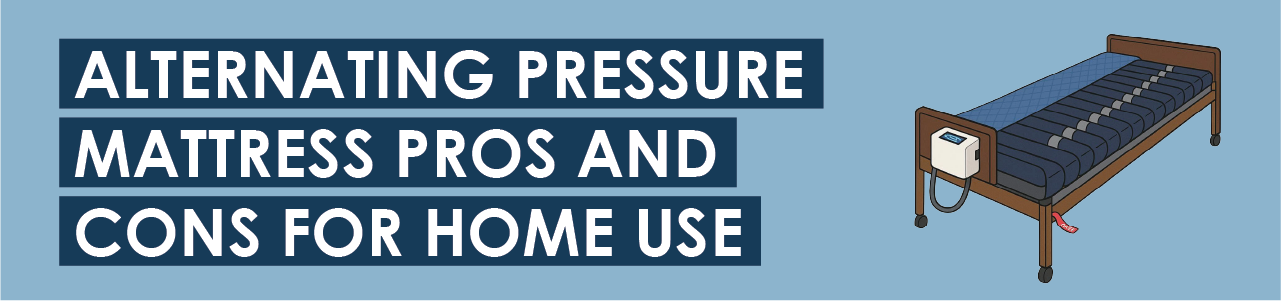
An alternating pressure mattress can be a strong option for home use when pressure relief becomes more important than basic comfort alone. It changes support across the surface over time, which may help when a person spends longer hours in bed, has limited mobility, or needs more than a standard foam mattress can provide.
The tradeoffs matter too. Pump noise, motion during sleep, setup, power dependence, and cost can make an alternating pressure mattress feel like more than some households....
TL;DR
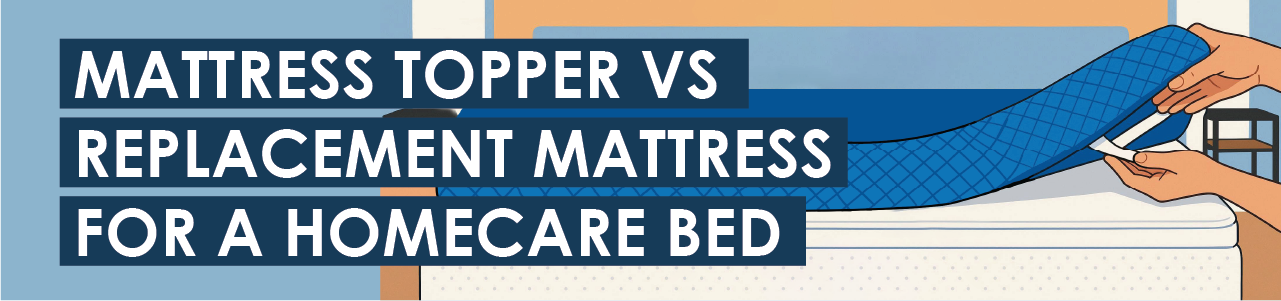
A mattress topper is usually the better fit when the goal is to soften the surface or make a lighter comfort adjustment while the underlying mattress still performs well. A replacement mattress usually makes more sense when the bed is used daily, the mattress feels worn or flattened, transfers are harder, moisture is a concern, or pressure relief needs have increased.
A topper changes the top layer. A replacement mattress changes the full support surface. The right choice depends on whether....
TL;DR
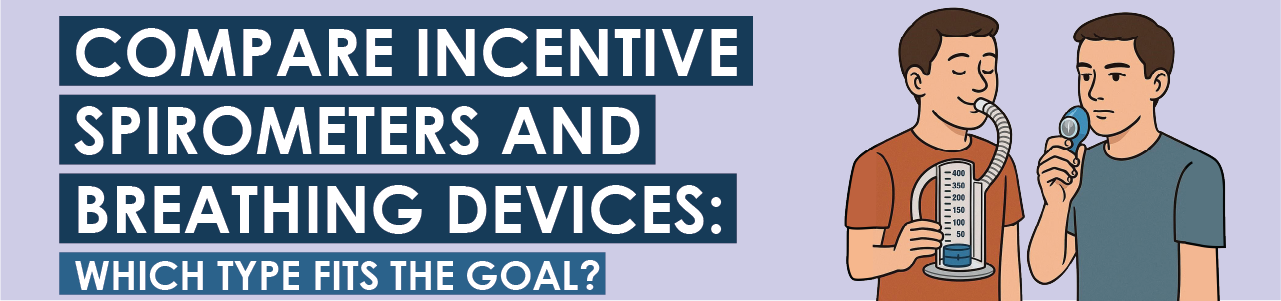
Not every breathing device is solving the same problem. Standard volumetric incentive spirometers fit basic post-op lung expansion and guided deep breathing.
Inspiratory exerciser formats can offer a different visual-feedback style. Respiratory muscle trainers are built for a different training goal than basic post-op spirometer use.
Spirometry systems fit testing and measurement, not simple home recovery breathing support.
Not every breathing device is built for the same use. Some products....



Login and Registration Form