Learn about pressure sores, their causes, and how to prevent...
Wheelchair Cushions & Seat Pads - Gel, Foam, Convoluted
Wheelchair cushions are designed to redistribute weight, improve comfort, and help protect skin during prolonged sitting. Convoluted eggcrate foam cushions can help relieve pressure and support the prevention of pressure-related soreness. Gel wheelchair seat cushions combine foam and gel layers to support weight distribution while helping manage heat and moisture. Comfort Plus Hollowcore Wheelchair Liners provide full chair padding to reduce cont
-
Most Popular

How to Choose a Wheelchair Cushion
Why Choosing the Right Wheelchair Cushion Matters

People who use a wheelchair for transportation may spend many hours in it each day. Some individuals spend most of their waking hours seated. In these situations, support and comfort are critical. Without an appropriate cushion, or with a cushion that is the wrong size, shape, or density, a person may sit in a position that is not supportive for long periods. Over time, this can contribute to back, pelvic, and coccyx discomfort.
Extended sitting can also create uneven pressure distribution, where weight is concentrated on a few areas of the body. This may lead to pressure-related pain and, in some cases, pressure sores. Wheelchair users and caregivers can review the wheelchair cushion options Vitality Medical provides to select the material type, support structure, size, and weight capacity that best match individual mobility, posture, and skin-protection needs.
Types of Wheelchair Cushions
Foam
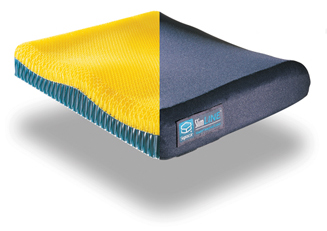
Foam wheelchair pads, such as the Stimulite Slimline Cushion, add seat padding and can help with pressure redistribution at a relatively low cost. Density (weight per unit of volume) options vary, and both traditional foams and high-density memory foam wheelchair pads are available. Many foams are made with polyurethane, latex, or a combination of the two. Individuals with latex allergies should check material composition details before purchase.
Foam density is an important comfort factor. Higher-density foam generally conforms more closely to the body and may distribute pressure more evenly while offering greater durability. Lower-density foams are lighter and often more affordable and may allow better air circulation to limit heat buildup. The best choice depends on user weight, time spent in the chair, and sensitivity to heat and pressure.
Gel
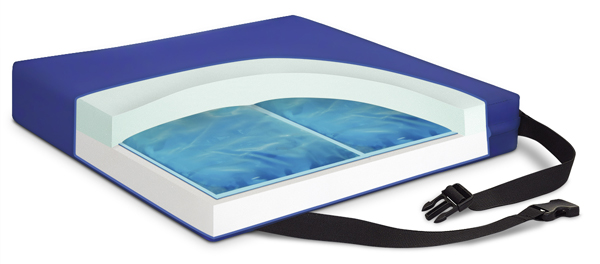
Gel pads for wheelchair seats usually combine gel with quality foam layers, so foam type and construction are important in addition to the gel itself. The gel helps manage heat buildup that can occur with foam cushions and can add support, pressure relief, and comfort. Gel layers also respond to movement, allowing the surface to conform more closely to the body. These characteristics make gel cushions a common option for individuals who need added comfort and pressure management.
Gel cooling seat cushions for wheelchairs are often heavier and more costly than basic foam cushions, but many users value the added comfort and temperature control. Products such as the Drive Medical Deluxe Gel Wheelchair Cushion are frequently selected by users who want both pressure redistribution and cooling support.
Air Cell
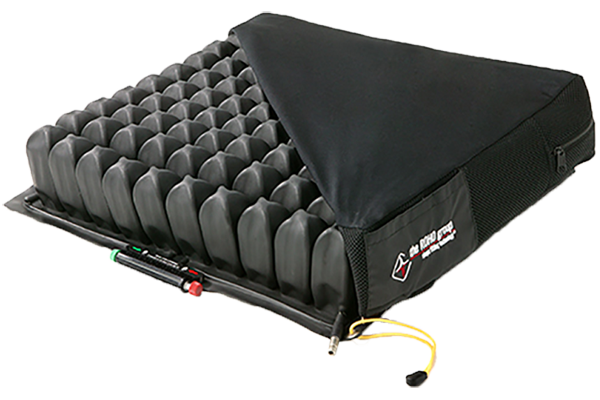
Inflatable air cell cushions, such as the ROHO Quadtro Select, are often used for higher-level pressure management. Individual cells shift as the person moves, and air pressure can be adjusted to match body shape and comfort needs. Some systems include battery-operated pumps and remote controls to alternately fill and deflate cell groups, changing pressure points over time.
Unlike foam cushions, air cell cushions are not at risk of “bottoming out” when properly inflated, although they can be punctured. Protective covers and patch kits are typically included to support long-term use. These cushions are frequently considered for individuals at higher risk for pressure injury or those who need more customizable pressure redistribution.
Positioning Support
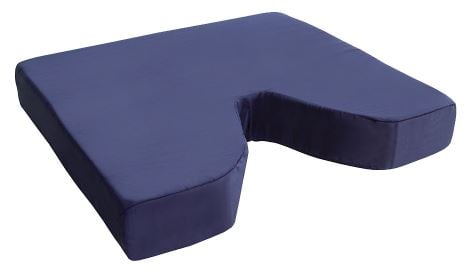
Body shapes and support needs vary, so some users benefit from cushions that provide targeted positioning for posture, alignment, or localized pressure reduction. Many cushions feature contoured seating surfaces that help redistribute weight and encourage a more stable sitting posture. Others are designed for specific areas.
Some products are designed for the back rather than the seat. Items such as the Drive Lumbar Support General Use Wheelchair Back Cushion provide added lumbar support, which can promote more neutral spinal alignment and may help reduce back strain during long periods of sitting.
Size Requirements
Seat size and weight capacity are key factors when selecting a wheelchair cushion. Cushions are offered in many shapes and sizes, so measuring the wheelchair seat and pelvic width before purchase is helpful. The cushion should match or slightly exceed the wheelchair seat dimensions for stable support.
Weight capacity is equally important, especially for air-inflatable cushions used for pressure sore prevention. Many products list a maximum user weight on the product page. Confirming these limits helps ensure the cushion performs as intended and maintains its shape and integrity over time.
Top-Selling Wheelchair Cushions and Accessories
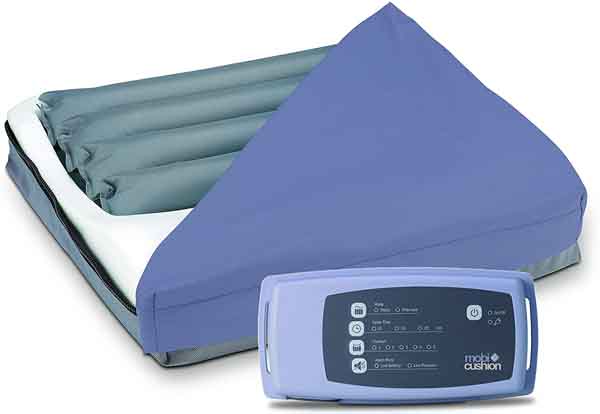
MobiCushion Pneumatic Seat Cushion
The MobiCushion by Pain Management Technologies is a top-selling wheelchair seat pad that uses inflated air cells for pressure redistribution. Side-by-side cells can be alternately filled and deflated so pressure does not remain on the same area for prolonged periods. Pressure can be adjusted to match comfort and support goals, which can be helpful for individuals at higher risk for pressure injury.
The MobiCushion has a 250-pound weight limit and includes a compact, portable pump that can be powered by battery or wall outlet. The pump is designed for straightforward operation and can be recharged as needed. A carry bag and a cover that is liquid-resistant, vapor permeable, and fire-retardant are included. The cushion can be used in many seating environments, not only in wheelchairs.
This product measures 17 inches wide, 17 inches deep, and 4 inches tall and is suitable for most standard wheelchair seats. It is rated to support up to 264 pounds.
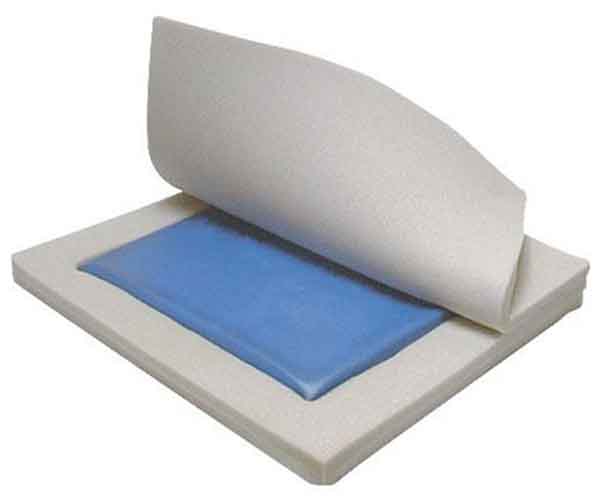
Drive Gel-U-Seat Lite Wheelchair Cushion
Individuals who prefer a combined foam and gel design can consider the Drive Gel-U-Seat Lite. This cushion features dual-chambered gel inserts within a foam base to conform to the body, distribute pressure, and add cooling comfort.
The cushion includes a removable, water-resistant, fire-retardant cover with a nylon top and vinyl bottom. The cover has 12-inch straps to help secure the cushion to a wheelchair or chair for stability.
The Gel-U-Seat Lite is available in multiple sizes so users can match cushion dimensions to their wheelchair seat. Width options include 16, 18, 20, 22, and 24 inches, with depths between 16 and 20 inches. Weight capacities range from 275 pounds (20 inches and below) up to 500 pounds (22 inches and above). All cushions are 2 inches high, and a 3-inch version is available separately through the Gel-U-Seat Cushion in retail packaging.
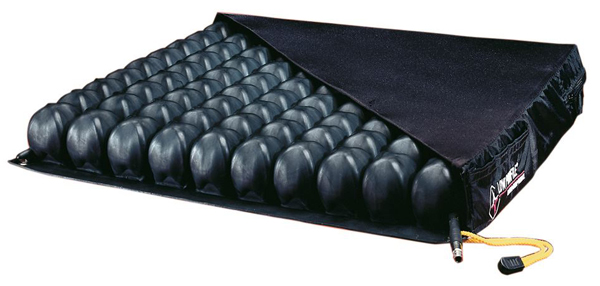
ROHO LOW Profile Wheelchair Cushions
The ROHO QUADTRO SELECT LOW PROFILE Cushion is another widely used air-filled option for pressure management and stability. Adjustable air cells allow the surface to conform to body contours and respond to shifting weight. User-controlled adjustments support individualized positioning, which may be helpful for people with pelvic asymmetry or complex seating needs.
This ROHO cushion does not have a published weight capacity limit, making it suitable for a wide range of users. It is available in three sizes: 15 x 15, 16 x 16, and 18 x 16 inches. All low-profile cushions are 2 inches in height, and a 4-inch HIGH Profile version is also available.
A protective cover is included. Both the cushion and cover can be cleaned with mild soap and water, and repair kits are typically available if patching becomes necessary. The materials are fire-resistant, supporting safety requirements in clinical and home settings.
More Wheelchair Accessories
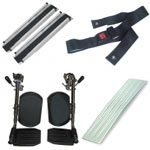
Vitality Medical also offers additional wheelchair accessories to support comfort and daily use. Options include arm supports, replacement pumps and remotes for air cushions, bottle holders, drain bag holders, safety belts, footrests, and other add-ons. Items such as the Posey Deluxe Lateral Arm Support can be used with cushions to build a more complete seating system tailored to individual needs.
Related Categories
Inspired by your history...

@Recommendation.StarRating
@Recommendation.Gender
Login and Registration Form