
This blog is a quick guide to common medical terms you may encounter while being a caregiver for a loved one.
Checkout using your account
Checkout as a new customer
Creating an account has many benefits:
This section presents articles related to patient safety and precautions, focusing on products, protocols, and usability features that support secure care practices. Readers can explore posts about safety aids, protective gear, and precautionary tools to understand how products can enhance safe care environments.
New blogs are added regularly to address emerging safety standards, product innovations, and user needs. To start, read one of the featured articles to learn how specific items and precautions may help improve day-to-day safety and confidence.
This blog is a quick guide to common medical terms you may encounter while being a caregiver for a loved one.

Learn about the different types of tracheostomy tubes and which one may be right for you.
TLDR: Testosterone supplies are easier to manage when the main items are grouped by use: syringes and needles, alcohol swabs, gauze or bandages, and sharps disposal. Check which items are included, which are separate, and which need to be reordered before they run low. Follow the prescription, medication label, and clinician instructions for dose, needle size, injection method, and storage.
A testosterone injection supply checklist....

TLDR: Testosterone needle sizes can be confusing because product listings may show gauge, length, syringe volume, needle role, and connection type in the same title. Gauge tells how thick or thin the needle is. Length tells how long the needle is. Syringe volume tells how much the barrel can hold. These details should be read together, but the correct size should always follow the prescription or clinician's instructions.
Testosterone needle sizes can....
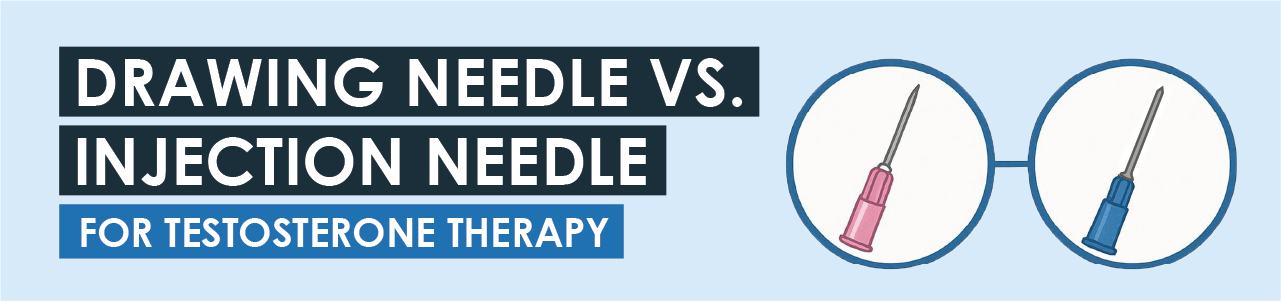
TLDR: Testosterone needle setups can be confusing because the drawing needle, injection needle, syringe, and connection type all need to work together. A drawing needle is used to draw medication from the vial, while an injection needle is used after the medication is in the syringe; therefore, a two-needle setup is part of the prescribed routine.
Drawing needle vs injection needle for testosterone is not just a definition question. The real issue is understanding....

Learn the different ways wounds progress as they heal and how to differentiate these signs from infection.

Learn about the importance of adapting medical supplies and equipment to a patient's changing condition and needs.

TLDR: Most supplies for peptide injections are simple to keep together: syringes, needles if needed, alcohol swabs, gauze or bandages, a sharps container, and optional storage or travel items. Keeping these basics in one place makes them easier to find, check, and reorder.
For GLP-1, GLP-2, semaglutide, tirzepatide, or other peptide-related supply orders, the product listing should make it clear whether the needle is attached or purchased separately.

TLDR: Peptide syringe sizes describe barrel capacity, such as 0.3 mL, 0.5 mL, or 1 mL. Needle size usually refers to gauge and length, such as 29G, 30G, 31G, 5/16 inch, or 1/2 inch. U-100 markings help compare syringe listings, but are not the same as the medication dose.
The sizes can be confusing because product listings often combine several details within that syringe name. For example, a syringe may be listed as 1 mL, 30G....


Login and Registration Form