
Quick Summary:
Enteral feeding is how individuals meet their nutritional needs when they cannot do so orally. Enteral formula may be administered through an open system or a closed, ready-to-hang system. Feedings may also be delivered by pump, gravity, or syringe according to the prescribed feeding plan.
Open systems require the caregiver to prepare formula and add it to a feeding bag for the patient.
Closed systems use a pre-filled formula container that directly connects to the enteral feeding system without requiring the formula to be transferred to another container before administration.
Both systems have distinct advantages and limitations. The appropriate system depends on the prescribed feeding plan, care setting, available equipment, and patient needs.
Whether at home or in a medical facility, caregivers and medical staff must maintain a well-organized storage space with adequate inventory. Always have extra supplies in stock in case of emergencies, supply chain delays, or shortages.
Always follow instructions provided by medical professionals and supply manufacturers.
Click a link to jump to the section.
Introduction
Transitioning to an enteral feeding system is an adjustment for both the patient and their caregiver. It changes the routines of everyone involved, but which tube feeding method works best varies by care setting and individual needs.
Caregiver feeding routines must accommodate whichever type of nutrition delivery equipment they use. Open and closed enteral feeding systems each have their own preparation requirements. Open systems involve more steps for setup than closed systems.
Open systems are common in home care because they accommodate several formula formats and delivery methods. Closed systems are common in facilities because sealed containers may reduce preparation steps and permit longer manufacturer-approved hang times. Availability, coverage, equipment compatibility, and the prescribed feeding plan also affect system selection.
Caregivers at home and in clinical settings should understand the differences between open and closed enteral feeding systems. Knowing how to prepare for feedings, administer formula, and store equipment can help establish a routine that works for both the caregiver and the patient at home or in a care facility.
Overview of Enteral Feeding Systems
Enteral feeding systems deliver formula into the stomach or small intestine, including the duodenum or jejunum. They are necessary for individuals who cannot attain adequate nutrition orally.1
There are two types of enteral feeding systems: open and closed. Both deliver the formula to the patient. The primary difference is how the formula is prepared and transferred before administration. The type of enteral system used will affect workflow and supply needs. Caregivers should plan accordingly.
While feeding system components vary from one situation to another, a few core components are shared across feeding setups.
- Formula - Premixed, canned, bottled, or powdered
- Delivery mechanism - bag, feeding pump, or syringe
- Enteral connectors - Typically ENFit
- Feeding tubes - G-tubes, NG tubes, J-tubes, nasojejunal tubes, or GJ-tubes
What Is an Open Enteral Feeding System?
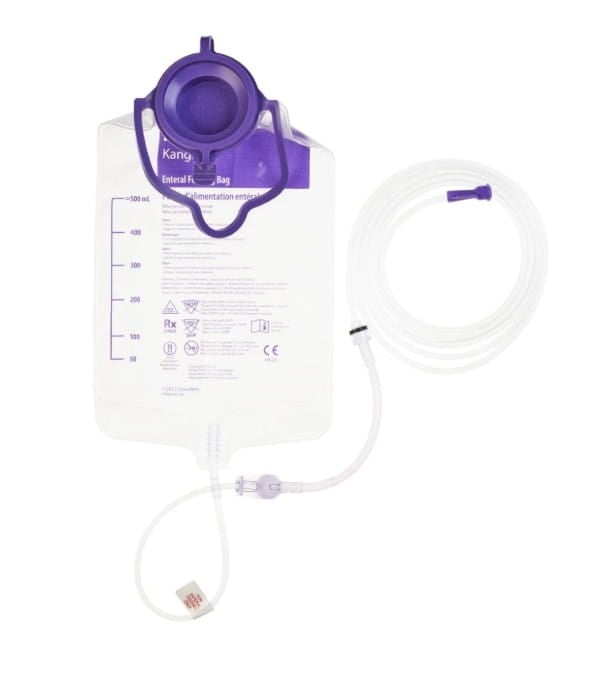
Open enteral feeding systems require formula to be prepared or transferred into a feeding bag, syringe, or other administration container before delivery.1 The term is often abbreviated to “OS”. Depending on the patient’s needs, they can support powdered, canned, or bottled formulas
Manual feeding preparation demands more time and energy from the caregiver.2 It also increases the risk of contaminating the formula.
Open systems may be administered using a feeding pump, gravity bag, or syringe depending on the prescribed feeding method. They generally have less formula and shorter allowable hang times than unopened ready-to-hang systems. Follow the formula manufacturer’s labeling and the patient’s care instructions for the applicable time limit.1
What Is a Closed Enteral Feeding System?
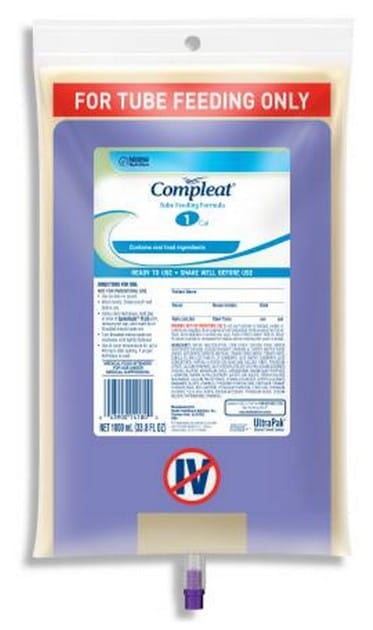
Closed enteral feeding systems are also known as “ready-to-hang” (RTH). They use pre-filled formula in sealed feeding containers that arrive ready to use. The administration set connects to or spikes the ready-to-hang container before formula is delivered through the feeding tube. Closed systems are most commonly used with enteral feeding pumps.
This type of system is often found in facilities. Because the formula remains in a sealed container until connected, ready-to-hang systems can reduce handling and opportunities for contamination compared with formula transferred into an open container.3
Depending on insurance coverage, RTH systems can sometimes be more expensive than OS due to the limited formula selection and the need for compatible administration sets. The formula containers are less practical for small-volume feedings.
Preparation and Daily Workflow Differences
The main differences between open and closed systems are equipment setup and feeding preparation. Keep caregiver handling time in mind when scheduling daily feeding routines.
Preparing Open Systems (OS)
- Gather equipment: bag, tubing, formula
- Wash hands
- Prepare a clean and dry working environment
- Label the container as directed, including the formula, preparation date and time, and other required feeding details
- Wipe the top of the formula can with an alcohol wipe or swab
- Check the feeding bag clamp. Validate that it is closed
- Open the formula
- Fill the feeding bag
- Close the feeding bag
- Properly position the patient as prescribed by a physician during and after feeding
- Follow the instructions from the manufacturer or a medical professional3
- After feeding, recap and store opened formula as directed
Preparing Closed Systems (RTH)
- Gather equipment: pre-filled formula container, tubing, pump
- Wash hands
- Prepare a clean and dry working environment
- Label the container as directed, including the formula, preparation date and time, and other required feeding details
- If necessary, shake the formula container to mix
- Remove protective caps without touching connection surfaces
- Attach or spike the administration set according to the formula container and administration set instructions
- Close the clamp
- Hang the formula container
- Load the administration set into the pump and prime the tubing according to the pump instructions
- Properly position the patient as prescribed by a physician during and after feeding
- Follow the directions from the manufacturer or a medical professional3
Feeding tubes are typically flushed with a prescribed amount of water before and after feedings, at intervals during continuous feeding, and before and after administering certain medications. Consult with a medical professional for instructions and additional information.
Supply Storage and Inventory Considerations
Enteral supply storage is essential for both open and closed feeding systems. Hospitals and other care facilities have storage areas and inventory systems in place. Supplies at home should also be stored in a clean, organized area that meets the product’s storage requirements.
Open and closed systems may have different storage needs depending on the type of formula, packaging, and quantity of supplies being stored. Keep the size and quantity of formula and replacement feeding sets in mind when organizing a storage space for enteral feeding supplies.
Manufacturers include storage instructions for formula.
- Be mindful of temperature and light exposure.
- Keep formula away from moisture, animals, insects, and household chemicals.
- Always check expiration dates before use.
- Rotate supplies so that the formula with the earliest expiration date is used first.
- Never use swollen, leaking, damaged, or unsealed containers.
- Refrigerate opened formula when required by the manufacturer.
- Discard formula after the manufacturer’s storage limit.
Plan inventory based on feeding frequency and care setting. Maintain a backup supply based on the care team’s or supplier’s recommendations. Rotate stock by expiration date, and avoid ordering more formula or disposable supplies than can be stored and used safely.
Compatibility With Pumps, Tubing, and Connectors
When purchasing pumps, tubing, or connectors, always check equipment compatibility.
Some administration sets can only be used with a specific pump brand and model.
Many ready-to-hang containers need adapters. Other systems may need a certain type of tube-port configuration.
Syringes need compatible tips with feeding tubing. ENFit connectors are widely used because they help reduce accidental misconnections between enteral devices and other medical tubing.
Formula compatibility may vary depending on the delivery method. Viscosity requirements may differ between pumps, gravity bags, or bolus administration.
Use in Home vs. Clinical Care Settings
Clinical Nutrition Support
- The patient is under nurse supervision
- Medical staff provides 24-hour care
- Nurses often have more medical training and experience
- The hospital’s formulary determines the equipment brand used
- Often uses closed enteral feeding systems
- Supply storage and inventory are managed by medical staff4
Home Enteral Care
- The patient is under a caregiver’s supervision
- Some individuals administer their own feedings, while others need assistance from a trained caregiver
- Caregivers receive training from medical professionals
- More brand options available in the home infusion/durable medical equipment (DME) formulary
- Often uses open enteral feeding systems
- Caregivers determine where to store supplies and how often to restock them4
General Handling and Safety Considerations
To help ensure enteral feeding safety, follow guidelines and instructions from a medical professional as well as the equipment’s manufacturer.
Do not add medication to formula unless specifically directed by a medical professional.
Establish a consistent feeding routine, follow proper handling protocols, and always be aware of the patient’s safety and needs.
When it’s time to replace the disposable components of the equipment, adhere to the guidelines of the manufacturer and local waste disposal services.
Conclusion
Open Feeding Systems
- Are often abbreviated to “OS”
- Require caregivers to prepare formula before feedings
- Are often used in home care settings
- May be administered using a feeding pump, gravity bag, or syringe
Closed Feeding Systems
- Are often referred to as “ready-to-hang” (RTH)
- Formula arrives in a pre-filled container
- Have a lower risk of contamination
- Commonly used in care facilities
- Most commonly administered using an enteral feeding pump
A qualified health care professional should determine the feeding method and system based on the prescribed nutrition plan, care setting, and patient needs.
Footnotes
- 1 ““Guide to Adult Tube Feeding.” anhi.org, Abbott Nutrition Health Institute, Aug. 2024, www.anhi.org/content/dam/an/anhi/pdf/guide-to-adult-tube-feeding-at-home-final-pdf.pdf.Accessed 20 July 2026.
- 2 Sinha S, Lath G, Rao S. Safety of Enteral Nutrition Practices: Overcoming the Contamination Challenges. Indian J Crit Care Med 2020;24(8):709–712.Accessed 20 July 2026.
- 3 Foster, Mallory, and Wendy Phillips. “Transition to Ready-to-Hang Enteral Feeding System: One Institution’s Experience.” Edited by Carol Rees Parrish, med.virginia.edu, University of Virginia School of Medicine, Dec. 2015, med.virginia.edu/ginutrition/wp-content/uploads/sites/199/2014/06/Parrish-Dec-15-Updated.pdf.Accessed 20 July 2026.
- 4 Reddick, Cynthia. “Managing Today’s Tube-Fed Patient From Hospital to Home: Lessons Learned and Myths Busted.” nestlemedicalhub.com, Nestlé, 22 June 2022, www.nestlemedicalhub.com/sites/default/files/2025-06/handout%20Managing%20Todays%20TF%20Patient%2006.22.22%202pp.pdf.Accessed 20 July 2026.
- 5 “Understanding Enteral Feeding Systems and Methods.” myamericannurse.com, American Nurse Official Journal, www.myamericannurse.com/wp-content/uploads/2017/01/ANT0117_Features_EnteralFeeding_Understanding.pdf?a. Accessed 20 July 2026.

Login and Registration Form