Click a link to jump to the section.
- Overview of Tracheostomy Tubes
- What Is a Cuffed Tracheostomy Tube?
- What Is a Cuffless Tracheostomy Tube?
- Airflow and Breathing Considerations
- Secretion Management and Daily Care
- Communication and Comfort Considerations
- Use in Home vs. Clinical Care Settings
- General Safety and Compatibility Considerations
Introduction
People can receive tracheostomies for a variety of reasons: for obstructions like trauma or tumors, long-term ventilation, or to provide a more stable airway. Whatever the reason, it is important to find tracheostomy care that fits the patient’s needs and comfort preferences.
Tracheostomies help provide airway management via trach tubes, which come either cuffed or cuffless. Trach tubes are used in both home care and clinical care. This page will discuss the differences between cuffed and cuffless tubes and which one may be right for you or your patient.
Overview of Tracheostomy Tubes
Tracheostomy tubes are tubes that are inserted into a stoma, or a surgically created hole, in the trachea to help the patient breathe. Trach tubes allow air to pass directly to the lungs without passing through the nose or mouth.
Common components of tracheostomy tubes are:
- Outer cannulas
- Inner cannulas
- Obturators
- Plugs
- Cuffs with inflation line (for cuffed trach tubes)
The two main types of trach tubes are cuffed and cuffless. The kind that a patient needs will depend on the kind and level of care they need.
What Is a Cuffed Tracheostomy Tube?
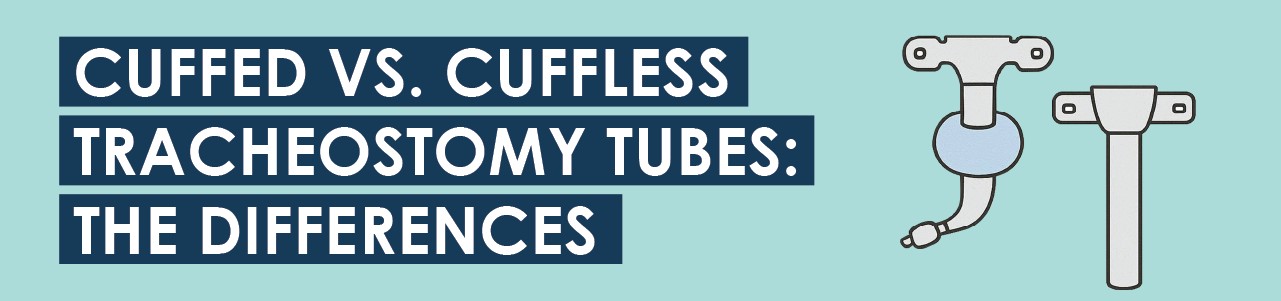
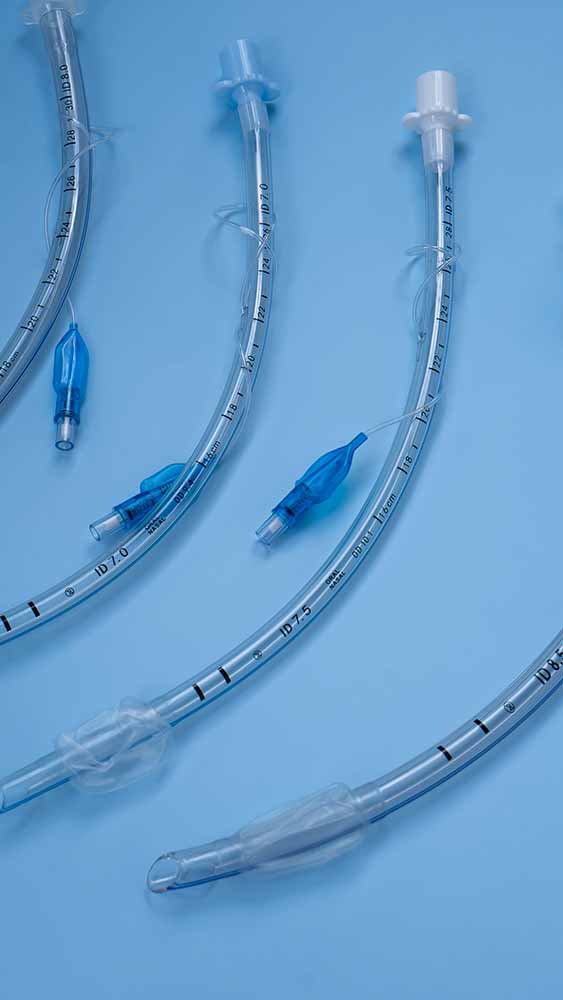
A cuffed tracheostomy tube has a balloon-like, inflatable feature that goes on the distal end of the tube. When inflated, the cuff pushes against the walls of the trachea to try to seal the airway, prevent air from leaking, and reduce secretions from entering the lungs.
Common cuffed trach tube types are:
- High volume-low pressure
- Low volume-high pressure
- Foam-filled
Read on to learn about these three types.
High Volume-Low Pressure
High volume-low pressure cuffs are inflated with air. These cuffs tend to cover a larger surface area of the tracheal wall, which can lower the risk of damaging it. However, the deflated cuff may take up too much space and inhibit exhalation or speaking.1
Low Volume-High Pressure
Low volume-high pressure cuffs are filled with sterile water. Since they typically cover a smaller surface area than the air-inflated cuffs, the airway is sealed off with higher pressure than the air-filled cuffs. The high-pressure seal can be effective for airway management, but it may pose a greater risk of injury to the tracheal wall.
However, when the water-filled cuff is deflated, there is less resistance to airflow and it can feel similar to a cuffless trach tube. These cuffs can be considered for patients who require mechanical ventilation with a cuffed tube only at night.1
Foam-Filled
Foam-filled cuffs are, as the name suggests, filled with foam. They are designed for patients with tracheal abnormalities by conforming to their natural contours. They are often considered very comfortable.1
What Is a Cuffless Tracheostomy Tube?
A cuffless tracheostomy tube is a trach tube without a cuff. Patients who no longer require mechanical ventilation and can breathe on their own can consider transitioning to using a cuffless trach tube.1
Cuffless trach tubes, like the Shiley Flexible Tracheostomy Cuffless Tube, allow for open airflow and are an ideal option for long-term home trach care when clinically appropriate.
Airflow and Breathing Considerations
As previously mentioned, cuffed trach tubes seal off the airway to enhance ventilation airflow between the tube and the lungs. This prevents air from coming from the nose or mouth and hinders the user from speaking (unless the patient uses a speaking valve).
Using a cuffless tube (or deflating a cuff) helps air flow more naturally and enables speech. If using a deflated cuff, there may be some airway resistance due to the balloon material still present in the trachea.
Secretion Management and Daily Care
Tracheostomy patients sometimes need extra help with secretion clearance. The upper airway usually manages that on its own by warming, humidifying, and filtering the air. But since that part of the airway is either blocked off or bypassed with a trach tube, secretions may become thicker, and patients may need extra help with clearing them.
Trach tube users or trained caregivers can use suctioning supplies to remove secretions.
Communication and Comfort Considerations
Since the upper airway is bypassed by a trach tube, a tracheostomy patient can have difficulties trying to speak. With a trach tube, the air goes directly from the tracheostomy to the lungs, meaning air does not pass as easily over the vocal cords for speech.
Trach tube users may use speaking valves to help make speaking easier. The valve attaches to the opening of the tube and allows air to be inhaled, but closes during exhalation to redirect airflow over the vocal cords and through the mouth and nose to aid speech.
Cuffless trach tubes will often be more comfortable to use with a speaking valve; however, they are still compatible with cuffed trach tubes. Trach cuffs must be deflated before speaking to allow for airflow, but there still may be some resistance from the deflated cuff that can irritate the trachea.
Use in Home vs. Clinical Care Settings
Home tracheostomy care and clinical tracheostomy care are not too different. In a hospital, respiratory therapists and nurses will handle daily hygiene, suctioning, and routine changes. These settings often are a more sterile environment and provide more access to advanced medical and emergency equipment.
Long-term respiratory care with a tracheostomy is similar at home, but with less access to advanced materials and a sterile environment. The tracheostomy will still need regular suctioning and overall hygienic practices, but they will be done by a caregiver. It is essential that the caregiver has the proper training to monitor a trach patient at home.
General Safety and Compatibility Considerations
As with any medical equipment, it is important to follow the manufacturer guidelines and instructions for proper use and care. If using any accessories, such as speaking valves or humidifiers, they must be compatible with the trach tube. Properly trained clinical staff and caregivers should know the best trach safety practices to give their patients the best possible care.
To prevent airways from drying out, tracheostomy patients may opt for a heat moisture exchanger, such as this one with foam media. HME’s attach to the trach and help humidify the air as it travels into the tube.
Conclusion
Trach tube selection will depend on the patient’s care and comfort needs. In summary, here are the main differences between different trach tubes:
- High volume-low pressure cuff: inflated with air. The balloon has a larger surface area and can inhibit airflow or speaking when deflated.
- Low volume-high pressure cuff: filled with water and has a smaller surface area, resulting in a tighter seal to prevent secretions or air leakage. Less air resistance when deflated.
- Foam-filled cuff: Filled with foam and often considered a very comfortable cuff. Designed to conform to tracheal abnormalities.
- Cuffless: allows the most airflow, ideal for patients who no longer rely on a ventilator and are transitioning to long-term home care. Also ideal for allowing speech.
When considering which kind of trach tube is right for you or your patient, make sure to consult a medical professional and find the right care supplies for starting trach care.
Footnotes
- 1 "Cuffed versus Cuffless Tracheostomy Tubes." Tracheostomy Education. Accessed 8 July 2026.

Login and Registration Form