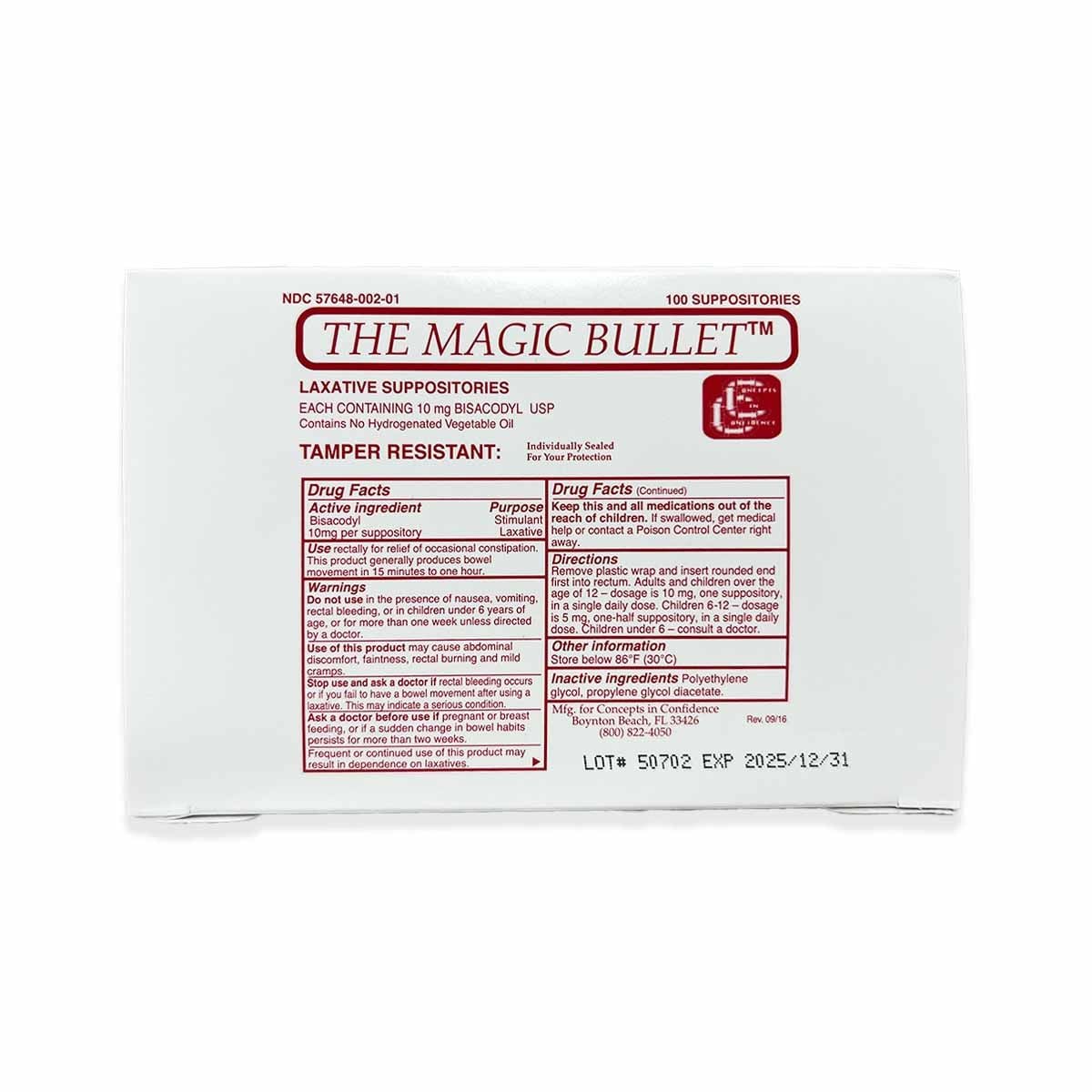
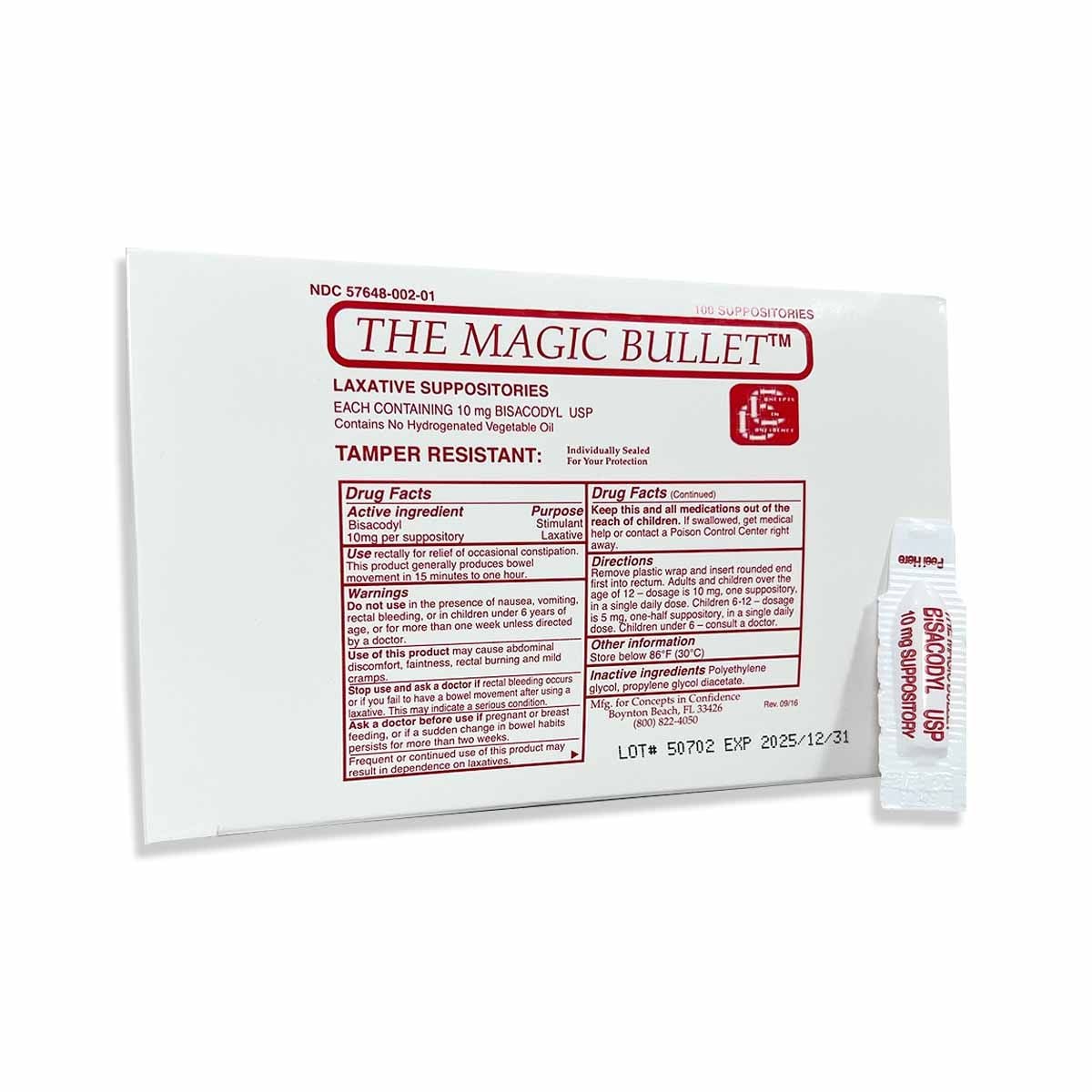
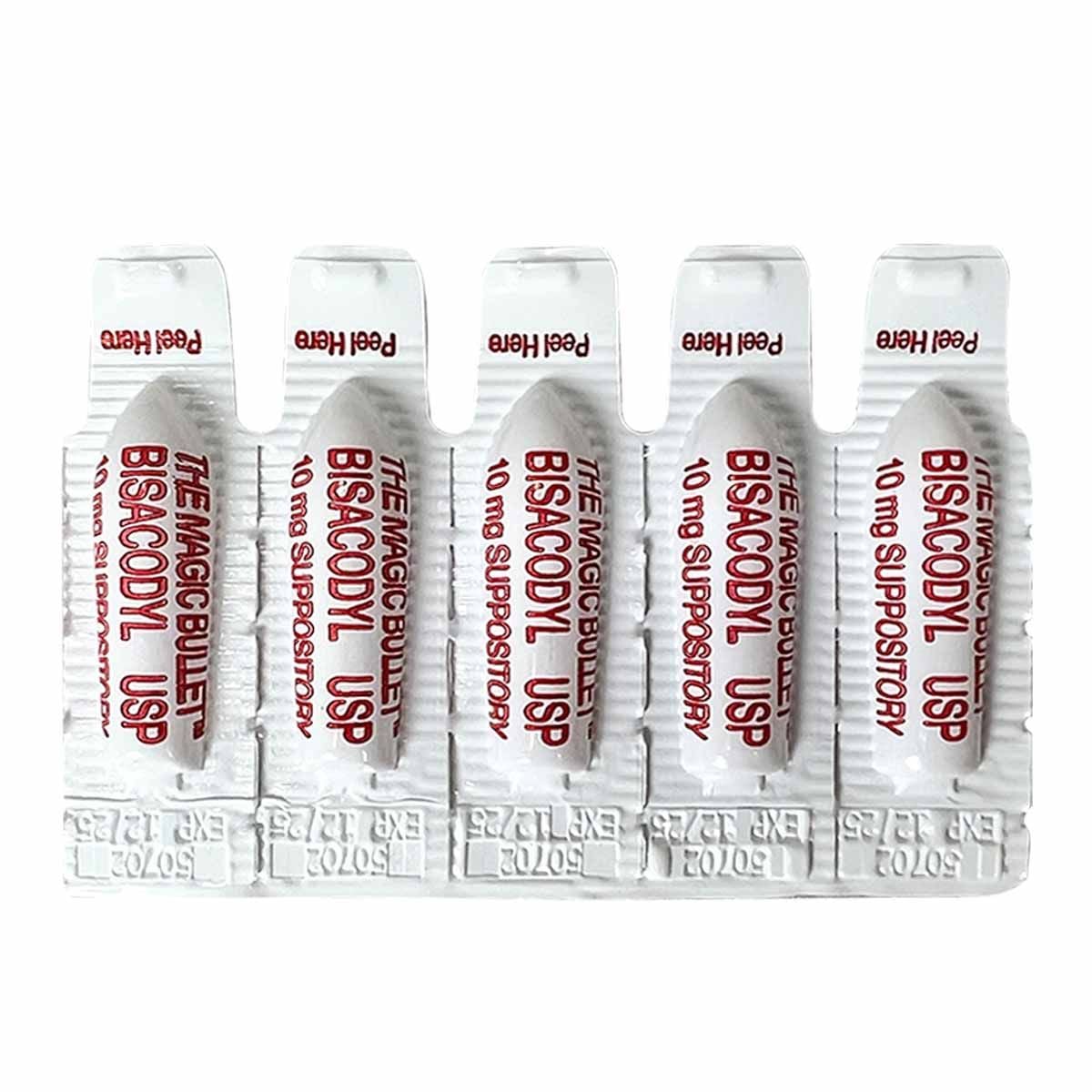



Magic Bullet is a bisacodyl rectal suppository made with a water-soluble polyethylene glycol (PEG) base for bowel care routines that need a faster, more predictable response. It is often used in scheduled bowel programs where timing and consistency matter.
Unlike oil-based bisacodyl suppositories that must melt before activation, the PEG base dissolves after rectal insertion. Bowel stimulation commonly occurs within 15 to 60 minutes, depending on individual response, which is why this stimulant laxative suppository is often compared with other rectal laxative suppository options used in routine bowel management.
Magic Bullet Suppository is commonly used in established bowel routines where timing consistency supports daily planning, including neurogenic bowel programs, spinal cord injury care, and caregiver-supported bowel care. Available quantities also support different purchase needs, with packs of 10 often chosen for lighter or trial use and boxes of 100 used more often for ongoing bowel management routines.
Features and Benefits
- Fast-dissolving PEG base
- Bisacodyl 10 mg stimulant
- 15 to 60 minute onset
- Supports scheduled bowel care
- Individually wrapped for hygiene
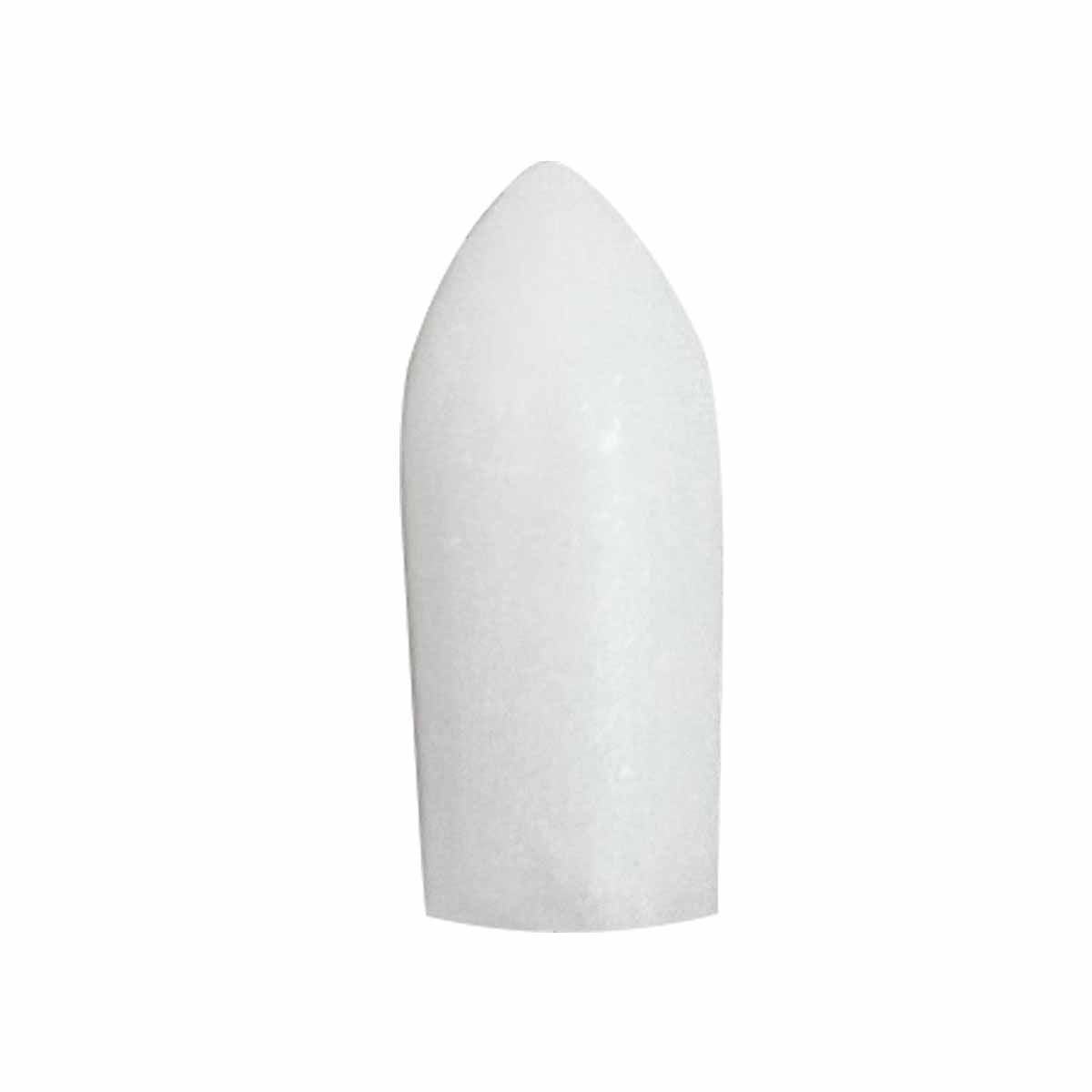
- Bullet shape for insertion
- Alternative to oil-based options
Specifications
- Active ingredient: Bisacodyl 10 mg
- Product type: Adult stimulant laxative suppository
- Dosage form: Rectal suppository
- Base: Water-soluble polyethylene glycol (PEG)
- Typical onset: 15 to 60 minutes
- Available quantities: Pack of 10, box of 100
- Manufacturer: Concepts in Confidence
- Storage temperature: Below 86 °F (30 °C)
Usage Considerations and Expectations
Magic Bullet contains a stimulant laxative and is typically used within an established bowel plan. Some individuals experience cramping, urgency, or mild rectal irritation, which are known effects associated with stimulant-based suppositories. Response time may vary based on neurological function, hydration, and prior bowel activity.
Compared with oil-based bisacodyl suppositories, this bisacodyl rectal suppository is often selected when a narrower and more predictable onset window is preferred. Although the active ingredient is the same, the base can influence how quickly stimulation begins after insertion.
How Magic Bullet Compares to Common Suppository Options
Magic Bullet is often compared with other suppository types based on active ingredient, base, onset time, dosage form, and routine-use fit. These factors can help individuals and caregivers choose the option that best matches timing expectations, constipation support needs, and scheduled bowel care routines.
| Product | Active ingredient | Base or formulation | Typical onset | Dosage form | Common use case |
|---|---|---|---|---|---|
| Magic Bullet | Bisacodyl 10 mg | Water-soluble PEG base | 15 to 60 minutes | Rectal suppository | Scheduled bowel routines where more predictable timing is preferred |
| Dulcolax | Bisacodyl 10 mg | Oil-based | 15 to 60 minutes | Rectal suppository | Occasional constipation relief |
| Fleet Glycerin | Glycerin 2 g | Glycerin-based | 15 to 30 minutes | Rectal suppository | Prompt relief for occasional constipation |
| Pedia-Lax | Glycerin | Glycerin-based | 15 to 60 minutes | Child-sized suppository | Pediatric constipation support |
Frequently Asked Questions
Why do some people choose this option instead of oil-based bisacodyl suppositories?
The water-soluble PEG base dissolves more quickly than oil-based formulations, which must melt before activating. This difference is often considered when predictable timing is important within a scheduled bowel routine or bowel care program.
How long does it typically take to work?
Bowel stimulation commonly occurs within 15 to 60 minutes after insertion, although response time can vary by individual. Neurological function, hydration, and prior bowel activity may affect onset timing.
How consistent is the onset compared with other suppository types?
Compared with oil-based bisacodyl suppositories, this formulation is often selected when a narrower onset window is preferred. Glycerin suppositories may also act quickly, although they work differently and are commonly used for milder or pediatric needs.
Does the active ingredient differ from other stimulant suppositories?
No. It contains the same stimulant laxative, bisacodyl 10 mg, used in other adult stimulant suppositories. The main difference is the base formulation, which affects how quickly the suppository dissolves after insertion.
What side effects are commonly reported?
Some individuals experience cramping, urgency, or mild rectal irritation. These effects are associated with stimulant-based suppositories and can vary depending on sensitivity and bowel function.
When should use be stopped or further guidance sought?
Use should be discontinued if rectal bleeding, persistent pain, or lack of response occurs. Ongoing use and frequency are typically guided by an established bowel care plan or clinical recommendations.
Is it appropriate for long-term bowel programs?
It is often incorporated into established bowel routines where timing consistency is important. Ongoing use patterns are typically determined within an individualized bowel management plan.
Storage and Handling
Store below 86 °F (30 °C) and protect from excessive heat. The PEG base may soften during shipping or warm storage conditions. If soft, brief refrigeration may restore firmness before use. Freezing is not recommended.

Login and Registration Form