Page 2 - Respiratory Therapy Blogs
This section presents articles about respiratory therapy products and accessories, with a focus on device features, usability, and product comparison. Readers can explore posts covering items like nebulizers, tubing, masks, and humidification systems to better understand available options.
More blogs will be added over time to reflect new developments, technology updates, and category trends. To begin, read one of the featured articles and discover how various respiratory tools may support care and comfort in breathing support routines.
-
TL;DR
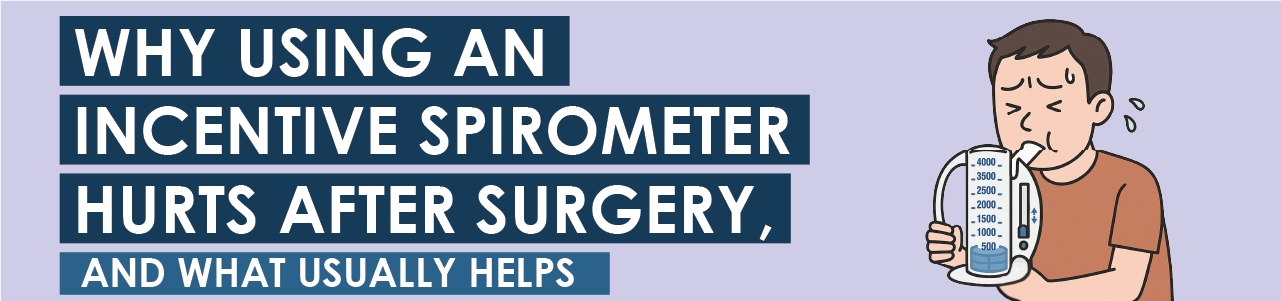
Using an incentive spirometer can feel uncomfortable after surgery because deep breathing often hurts during early recovery. Pain, soreness, incision location, and shallow breathing habits can all make the device harder to use.
The goal is not to force a dramatic effort, but to support deeper breathing safely and consistently. Better positioning, slower pacing, and a simpler device setup can make use easier.
If pain is the main barrier, the best product is often the one that feels easiest to....
Read more »
-
TL;DR
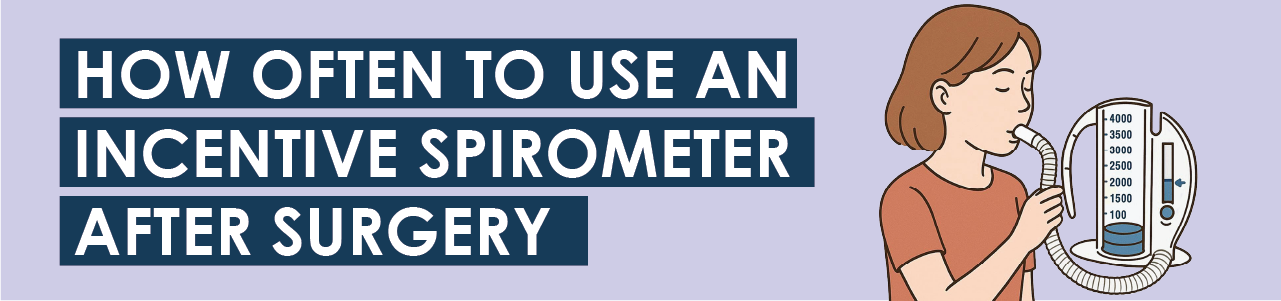
An incentive spirometer is used repeatedly during early recovery to counter shallow breathing after surgery.
Using it once or twice is not the same as using it consistently through the day. Repetition matters because the benefit is preventive.
The easiest device to read and repeat is often the best fit for home use.
Many patients are told to use an incentive spirometer after surgery, but they are not always sure whether they are using the therapy device enough. The device works best when it....
Read more »
-
TL;DR
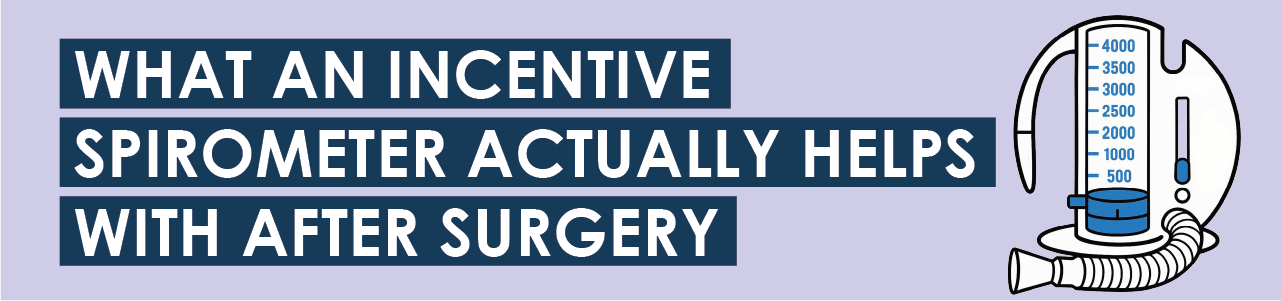
An incentive spirometer helps patients take slow, deep breaths after surgery. It helps expand the lungs and reopen air sacs that may not fully inflate after anesthesia or bed rest.
It can help move mucus and fluids so they do not sit in the lungs. It is commonly used to lower the risk of atelectasis and pneumonia after surgery.
It is designed to be used consistently, not just a few times a day.
After surgery, many patients ask the same question: What is this device actually doing, and why does....
Read more »
-
TL;DR
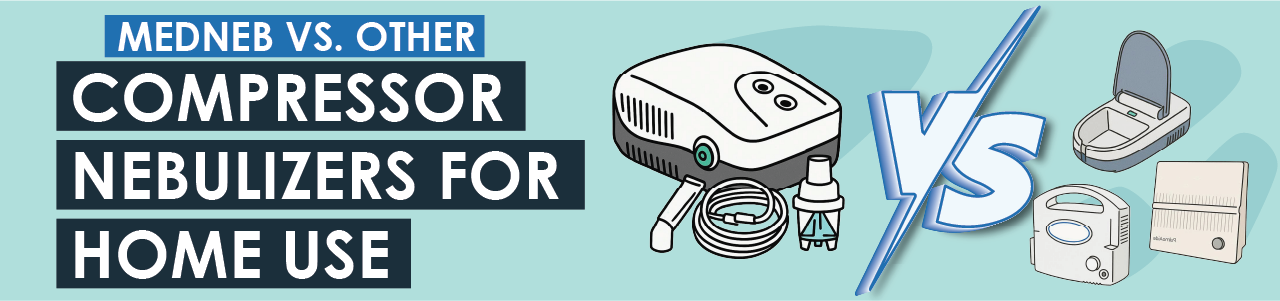
MedNeb is closest to compact home compressor nebulizers such as the Omron CompAIR NE-C801, while Drive Power Neb Ultra and DeVilbiss Pulmo-Aide Compact lean more toward larger tabletop home use. DeVilbiss Traveler stands apart because its battery-capable setup and transport support make it more travel-oriented than basic compact home compressors.
MedNeb is often compared with Omron CompAIR NE-C801, Drive Power Neb Ultra, DeVilbiss Pulmo-Aide Compact, and DeVilbiss Traveler because all of them....
Read more »
-
A practical MedNeb maintenance routine can help extend useful device life, reduce early replacement, and support more consistent long-term use. When routine care becomes more repeatable, it becomes easier to notice changes in treatment time, sound, and mist output before small problems turn into bigger ones.
Read more »
-
MedNeb compressor nebulizer care works best when the routine stays simple. Most home problems come from setup mistakes, skipped cleaning, blocked airflow, or filters that stay in too long. A quick setup check, regular accessory cleaning, and routine filter replacement can help keep the unit working as expected.
Read more »
-
The MedNeb compressor nebulizer is a plug-in tabletop device that uses an air pump, tubing, and a nebulizer cup to turn prescribed solutions into a fine mist for inhalation through a mouthpiece or mask. This article explains the main parts, how the airflow path works, and how the device fits into everyday home routines, without giving medication or diagnosis advice.
Read more »
-
new state-by-state analysis from Vitality Medical shows that response is far from uniform. Six of the Top 10 states in the Respiratory Readiness Index are in the South, where the region’s average respiratory burden score reaches 50.3 out of 100. At the same time, three Mountain West states post the highest per-capita home therapy demand in the country.
Read more »
-
Tracheostomy dislodgement is a serious emergency that requires immediate intervention. This is a general guide on what steps you should take when you or your loved one experiences a trach tube dislodgement.
Read more »
-
Sleeping while using a continuous flow oxygen concentrator is considered safe. However, pulse dose oxygen concentrators are not recommended for overnight use. This blog also recommends how to make nocturnal oxygen therapy more comfortable and effective.
Read more »





Login and Registration Form