TLDR: The MedNeb compressor nebulizer is a plug-in tabletop device that uses an air pump, tubing, and a nebulizer cup to turn prescribed solutions into a fine mist for inhalation through a mouthpiece or mask. This article explains the main parts, how the airflow path works, and how the device fits into everyday home routines, without giving medication or diagnosis advice.
Jump To
What Is A MedNeb Compressor Nebulizer?
This MedNeb system is a plug-in device in the home respiratory equipment family. Inside the housing is a small air pump called a compressor. When it is turned on, the compressor pulls room air in through a filter and pushes it through tubing into a nebulizer cup that holds a prescribed solution. The cup and its internal parts turn this airflow into a mist that can be inhaled through a mouthpiece or mask.
MedNeb sits within the broader home nebulizer category that includes plug-in tabletop compressor units, compact portable compressor machines, and small battery-powered handheld nebulizers. Those other devices are often chosen for travel or away-from-home use, while MedNeb is positioned as a plug-in tabletop compressor for use on a stable surface near an electrical outlet.
This article focuses on components, airflow, and daily routines. Questions about diagnosis, medicine choices, or treatment schedules should be directed to a licensed clinician or pharmacist.
Main Parts Of The MedNeb System
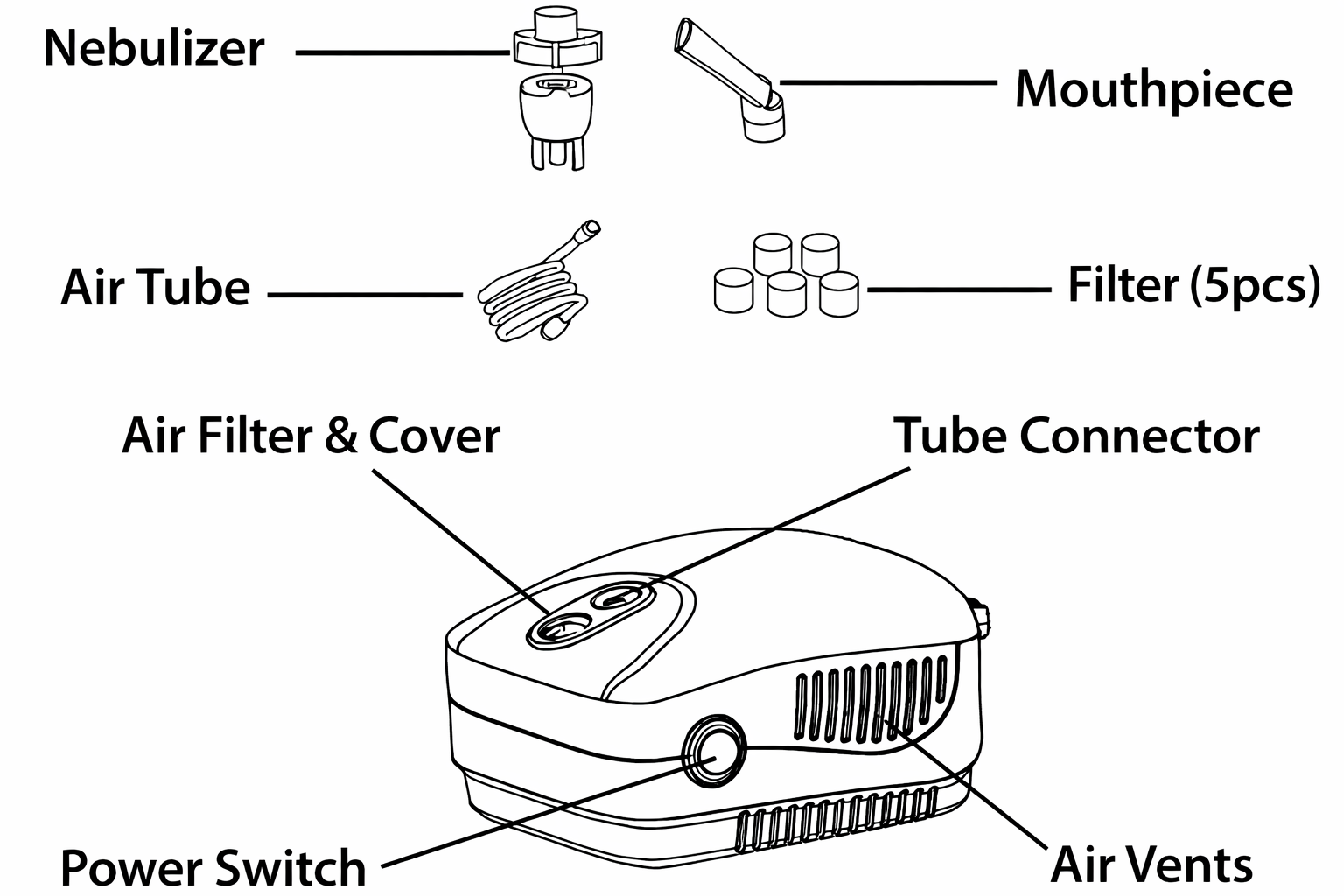
The main parts of the MedNeb system match the labels shown in the diagram. Knowing each component makes it easier to follow the instructions and spot simple setup issues.
Nebulizer
The nebulizer, sometimes called a medicine cup, is the clear chamber that holds the prescribed solution. Inside is a small piece called a baffle that helps turn the liquid and air stream into a fine mist.
Mouthpiece
The mouthpiece attaches to the top of the cup and directs the mist through the mouth. It is often used by older children and adults who can keep a steady seal during treatments.
Air tube
The air tube is the flexible, clear hose between the compressor and the nebulizer cup. It carries compressed air from the outlet port into the bottom of the cup.
Replacement Filters
Replacement filters are small discs that fit into the intake area of the compressor. They help clean the room air before it enters the compressor's intake and should be changed on the filter schedule in the device instructions.
Air filter and cover
The air filter and its cover sit on the side or back of the housing. Room air passes through this filter before reaching the compressor, so dust and debris are reduced.
Tube connector
The tube connector is the port on the front of the housing where the air tube snaps into place. It forms the link between the compressor and the nebulizer cup.
Power switch
The power switch is the main control on the top or side of the unit. It turns the compressor on and off and starts or stops airflow through the system.
Air vents
Air vents are openings in the housing that allow cooling air to move around the motor. Keeping these vents clear and uncovered helps the compressor run properly.
How The Compressor Turns Solution Into Mist
Although the outer housing can look complex, the basic airflow path in a MedNeb compressor nebulizer is straightforward. The device moves room air through a set path without heating the medicine.
Simple airflow path
During use, room air enters the compressor through the intake filter. The motor compresses this air into a higher-pressure stream and pushes it out through the air outlet port. The air flows through the tubing into the bottom of the nebulizer cup. Inside the cup, the baffle and nozzle break the liquid into small droplets, creating a fine mist that rises toward the mouthpiece or mask.
Compressed air in practical terms
In this context, compressed air means air that has been pressurized by the small pump inside the compressor. The process relies on pressure, not heat. Under normal use, the solution in the cup stays close to room temperature. The device does not boil or heat the medicine.
Typical treatment sequence
Although individual instructions vary by model and prescription, many home compressor nebulizer sessions follow a similar device sequence:
- Setup steps such as placing the compressor on a stable surface, connecting tubing, assembling the cup, and attaching a mouthpiece or mask.
- Adding the prescribed solution to the cup as directed by a clinician or medication label.
- Turning the device on, which starts the airflow and produces a steady visible mist from the top of the cup.
- Running the compressor until the cup begins to sputter and the mist slows, which usually means most of the solution has been aerosolized.
- Turning the device off, disconnecting parts, and following the cleaning steps in the instructions.
What people usually notice during use
During operation, many people notice the sound level from the compressor motor, a light vibration that can travel through the table, and a cool mist near the mouthpiece or mask. Placing the unit on a stable, flat surface can reduce rattling. The visible mist at the top of the cup is a visual cue that the airflow path is working as intended.
Why Treatments Take Time
One of the most common home-use questions is why a nebulizer session is not finished in a minute or two. A compressor nebulizer works by steadily moving air through the cup and turning the solution into mist over time. That means treatment length depends on more than the power switch alone.
In real life, run time can change with the amount of solution in the cup, the cup design, the condition of the baffle, the fit of the tubing, and whether the filter is still clean enough to support normal airflow. A session that feels slower than usual does not always mean the compressor itself is failing. Sometimes the issue starts with the cup, the tubing, or a filter that has become dirty and gray. If a session suddenly feels much longer than usual, the first things to check are the filter, cup condition, and tubing fit.
This is why compressor performance is often felt as treatment length rather than judged by a single spec. For many households, the more useful question is whether the current session feels familiar compared with the usual routine.
Why The Device Makes Sound
Another common question is why a tabletop compressor nebulizer sounds noticeable during use. The answer is simple. The MedNeb contains a small motor and pump that pressurize room air and move it through the system. That mechanical airflow process creates sound and light vibration during operation.
Some of that sound may feel louder depending on where the device is placed. A hard table, hollow nightstand, or crowded surface can make the vibration more noticeable. The sound does not usually mean something is wrong by itself. It is often part of normal compressor-based nebulizer use in home settings. A change in sound is more important than sound by itself, especially if the unit seems louder on the same surface than it used to.
In practical terms, people often notice the sound most during naps, late-night treatments, or use in shared rooms. Placement can help, but the vents should stay clear, and the device should stay on a stable surface during operation.
Where MedNeb Differs From Older Home Nebulizers
Compressor nebulizer technology has been used in homes for many years. MedNeb reflects changes in size, layout, and everyday usability compared with older, bulkier units.
Tabletop format with a simpler footprint
Older compressor nebulizers were sometimes larger and more awkward to position on a bedside table or kitchen counter. MedNeb follows the more compact tabletop style that fits more easily into a home setup without dominating the space around it.
Room-to-room portability
Weight and shape matter when a device is moved often. A more compact tabletop compressor is easier to reposition from a bedroom to a living area or another treatment space. This can matter in homes where treatments happen in different rooms at different times of day.
Storage for tubing and accessories
Between sessions, tubing, cups, and masks need a clean storage spot. Some compressor units include a tray or compartment where accessories can rest. Others rely on a nearby drawer, basket, or container. Planning where clean, dry parts will sit between treatments helps keep the area organized and reduces the chance of misplacing pieces.
Real-world tradeoffs in design
MedNeb places emphasis on durability and simplicity. Straightforward controls, such as a single power switch, reduce confusion and keep the focus on the basic function of creating mist. In exchange, this kind of no-frills compressor may skip extra features such as built-in timers or digital displays. Shoppers often weigh a simple, reliable unit against added features that can increase cost or learning curve.
Treatment Routines In Real Life (Device Only)
In many homes, nebulizer sessions become part of a daily or as-needed routine. While treatment decisions belong to clinicians, understanding how the device fits into real life can make that routine easier to manage.
Typical device pattern
A common pattern for a tabletop compressor nebulizer includes preparation, a run period, and cleanup:
- Preparing the area by choosing a stable table or counter, plugging in the compressor, and gathering clean tubing, a cup, and a mouthpiece or mask.
- Assembling the parts according to the instructions and adding the prescribed solution to the cup.
- Running the device for the time needed for the cup to empty, which can vary with the solution volume and cup design.
- Turning off the compressor, disassembling the cup, and cleaning and drying the parts as directed.
Common friction points
Several device-related issues can make home use feel harder than expected:
- Setup time, especially at busy times of day or when supplies are stored far from the treatment area.
- Noise from the compressor motor in small rooms, shared spaces, or near sleeping family members.
- Limited table space when the device, medicine, and cleaning supplies all compete for space.
- A session feels longer than expected when the cup, tubing, or filter is worn, dirty, or not fitted correctly.
- Mist looks lighter or weaker than usual, even when the device is turned on.
For a step-by-step example that includes setup, breathing pattern, and post-use cleaning, a patient guide from MedlinePlus on how to use a nebulizer walks through a typical home treatment session in more detail.
Design features that can reduce friction:
- Simple, clearly labeled controls that are easy to see and reach.
- Few separate parts, which shortens setup and cleanup steps.
- Smooth, easy-to-wipe surfaces on the housing for quick cleaning.
- A stable base that stays in place on the table during use.
What MedNeb Is And Is Not Designed To Do
Clarity about the role of a MedNeb compressor nebulizer can help set realistic expectations and support better buying decisions.
What table-top compressors are built to do
Tabletop compressor nebulizers are built to take in room air, compress it, and deliver that air through tubing into a nebulizer cup. When a prescribed nebulized solution is placed in the cup according to the device instructions and a clinician’s directions, the system can generate a mist that is intended to be inhaled through a mouthpiece or mask.
What MedNeb is not
- It is not a pocket inhaler. Metered-dose inhalers and dry powder inhalers are separate devices with different mechanics and instructions.
- It is not a spacer. Spacers are add-on chambers used with certain inhalers, not with compressor nebulizers.
- It is generally not a battery-powered travel device. The MedNeb compressor nebulizer is designed to plug into a wall outlet and to be used on a stable surface.
| Device Type | Power Or Format | What It Is Built To Do | What It Is Not |
|---|---|---|---|
| Tabletop Compressor Nebulizer | Plug-in compressor unit | Pushes air through tubing into a nebulizer cup to create mist for inhalation through a mouthpiece or mask. | Not a pocket inhaler, not a spacer, and generally not a battery-powered travel device. |
| Portable Or Travel Nebulizer | Often battery-powered or compact portable format | Designed for more mobile use away from a fixed tabletop setup. | Not the same as a plug-in tabletop compressor like MedNeb. |
| Inhaler | Handheld medication delivery device | Delivers medication in a compact puff or dose through a built-in mouthpiece. | Not a compressor system and does not use tubing, a nebulizer cup, or a separate air pump. |
| Spacer | Add-on chamber used with some inhalers | Holds inhaler medication briefly to help with inhalation timing. | Not a nebulizer, not a compressor, and not a stand-alone mist-producing device. |
Why device limits matter
Knowing where this unit fits in the respiratory equipment family helps prevent confusion. A person who expects a handheld, silent, battery-powered device may be surprised by the size and sound of a tabletop compressor. Understanding that MedNeb focuses on airflow and mist generation, while medication choice and treatment timing belong to clinicians, supports safer and more realistic use.
Summary: Key Takeaways
The MedNeb compressor nebulizer is a plug-in tabletop device that uses a small air pump to push room air through a filter, into tubing, and then into a nebulizer cup where a baffle turns liquid solution into a fine mist for inhalation through a mouthpiece or mask.
Treatment time is shaped by airflow, cup design, liquid volume, and the condition of wear parts such as the filter, tubing, and cup. That is why one session may not feel the same as another if the setup condition has changed.
Compressor nebulizers also make a noticeable sound because a small motor and pump are moving pressurized air through the system. Sound and light vibration are part of normal tabletop compressor use and can feel more obvious on certain surfaces or in quiet rooms.
Recognizing the main parts of the setup, such as the compressor base, nebulizer tubing, cup, and interface, helps with setup, cleaning, and storage, and makes it easier to follow the instructions that ship with the device.
The device’s role is limited to creating mist from prescribed or clinician-directed solutions. Choices about diagnosis, medication type, dose, and treatment schedule remain medical decisions rather than device features. Consistency from one treatment to the next often depends on clean parts, open airflow, and wear items that have not been left in place too long.

Login and Registration Form