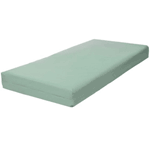
Learn about the differences between foam and alternating air pressure hospital mattresses and which one may be right ...
Hospital Bed Mattresses for Sale
Hospital bed mattresses address the issues that patients may have, such as incontinence and pressure sores. Vitality Medical has several different types of hospital bed mattresses for sale, including innerspring mattresses, foam mattresses, alternating pressure mattresses and bariatric mattresses. Each hospital bed mattress offers comfort and care to those who may be bedridden or who necessitate ongoing care in either facilities or home health ca
Shop By Category
-
Most Popular

Mattresses for Hospital Beds at Vitality Medical
Shop many different hospital mattress types and styles at Vitality Medical, all at discounted prices for any budget. Have questions about which hospital mattress is right for a patient’s needs? Refer to our Medical Mattress Guide section at the bottom of this page for more information about the types of hospital mattresses that are offered at Vitality Medical. For further questions about products and features, contact a product specialist via live chat or by phone seven days a week during business hours, which are 8 a.m. to 5 p.m. MST, or send an email at any time of day or night.
Check out the hospital mattress shopper's guide below to learn more about the mattress types offered by Vitality Medical and their benefits.
Which medical mattress is best?
Medical Mattress Guide
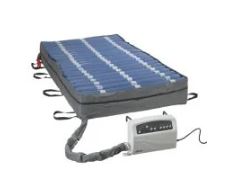
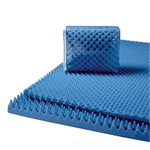
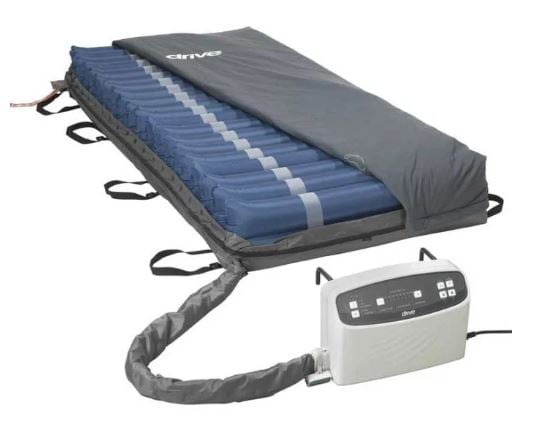
Preventive: Several inflatable medical mattresses (also called air hospital beds or pressure relief mattresses) and foam mattresses help protect delicate skin and mitigate painful pressure sores that may arise during extended bed rest. Some have alternating air pressure levels (via air cylinders or pumps) to promote circulation and prevent bedsore formation. Many foam beds feature heel slopes that reduce pressure on sensitive heels to prevent abrasion-related injuries.
Select foam mattresses and inflatable mattresses have elements, such as winged sides, to mitigate fall and entrapment risks. Some inflatable mattresses have transfer modes that facilitate daily living activities.
Turning: Some advanced inflatable mattresses provide lateral rotation for non-ambulatory occupants via dual pairs of cylinders or pumps that inflate and deflate to gently rotate an occupant onto his or her side. Beyond comfort, these features play a role in preventing or treating pressure-related skin ailments.
Span America’s PressureGuard APM2 Mattress is a prime example of an inflatable air mattress that laterally rotates occupants at the flip of a switch. It features two therapy modes, heel slopes to reduce heel pressure and its GeoMatt Overlay reduces both heat and pressure.
Comfort: Similar to many home mattresses, comfort hospital mattresses consist of inner springs (coils) that tend to be firmer and more supportive than other medical mattresses. These may be preferred by occupants who enjoy constant levels of firm support.
The Invacare Deluxe Innerspring Hospital Bed Mattress is a customer favorite because it blends familiar comfort with healthcare-grade features, including an antibacterial, anti-static and waterproof vinyl cover. Its coils are redistributed to offer pressure point relief; this medical mattress accommodates patients up to 250 lbs.
For bariatric patients, Drive Medical’s Med-Aire PLUS 60-inch Wide Bariatric Alternating Pressure Low Air Loss Mattress System is a comfort solution for individuals who weigh up to 1000 lbs. This innovative hospital air mattress is made with 20 air bladders with 10-inch cells that will not collapse during power loss events.
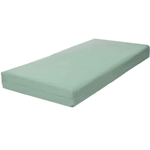
Budget: Some customers prefer the simplicity and value of latex-free polyurethane foam hospital mattresses. Many choose foam mattresses to outfit larger facilities and homes with multiple bed frames. Foam mattresses are typically covered in easy-to-clean vinyl or nylon.
Proactive Medical’s Protekt 100 Pressure Redistribution Foam Mattress is preferred among value-driven Vitality Medical customers because it deftly blends comfort with durability. It features three unique pressure zones, is fire-retardant and has an anti-contamination flap; this medical mattress accommodates patients up to 300 lbs.
Ranging in size from 35-36 x 80 inches, inner-spring mattresses are economical choices for those upgrading existing hospital bed frames. Inner spring medical mattresses typically fit these specialty frames better than a traditional twin mattress. Many models are covered with low-maintenance, liquid-resistant materials.
Graham-Field’s Standard Care Foam Mattress is designed to withstand the rigors of healthcare. It is fluid-resistant, flame retardant and its cover is anti-fungal, anti-static and non-allergenic. This cost-effective, latex-free hospital mattress is designed to prevent stage 1 pressure ulcers.
Related Categories
Inspired by your history...

@Recommendation.StarRating
@Recommendation.Gender
Login and Registration Form