
Updated: February 4, 2026
Discover how a pill organizer can help with medications, vitamins, or supplements
Many people have difficulty remembering to take medications, vitamins, or supplements on time. Studies estimate that about half of patients do not follow their medication schedule as prescribed. Complex dosing routines can make adherence even harder.
The World Health Organization defines non-adherence as taking medication less than 80 percent of the time.
This problem of non-adherence is sometimes called America’s other drug problem. It has a significant impact on health outcomes and on medical costs. Missed or delayed doses can lead to poor symptom control, avoidable clinic visits, and, in some cases, rehospitalization.
Researchers have identified many reasons for non-adherence, including cost, side effects, and communication gaps. However, simple forgetfulness remains one of the most common causes. Changes to a familiar pill routine can be especially challenging when doses vary by day or time.
Some regimens require frequent adjustments, such as several tablets in the morning on certain days, with a different amount on others. Different pills at breakfast, lunch, and dinner can also create confusion. These patterns increase the risk of missed doses or accidental double dosing.
Pill organizers provide a practical way to support adherence. Organizers do not replace clinical guidance, but they help keep medications grouped by day and time so that doses are easier to track. A caregiver or patient still needs to load the correct pills into the proper compartments and monitor the organizer regularly.
Pill organizers range from simple weekly boxes with one compartment per day to more advanced devices with multiple time slots, alarms, and communication features.
How to choose a pill organizer
The best pill organizer depends on the individual’s regimen and lifestyle. The following questions can help identify suitable options:
- How often are medications taken (once daily, twice daily, or several times per day)?
- How many pills are taken at each dosing time?
- Does the number of pills stay the same or change by day?
- Are audible or visual reminders needed?
- Is a locking feature important for safety or security?
- How many different medication schedules need to be managed?
- Is the individual at home most of the time, or frequently away?
- Is pill cutting or crushing part of the routine?
Automatic pill dispensers
Automatic pill dispensers combine organization with built-in reminders. With a device such as the Med-E-Lert, medications, vitamins, and supplements are preloaded into a rotating tray according to the dosing schedule. Alarms signal when it is time to take the next dose, and the dispenser advances to the correct compartment.
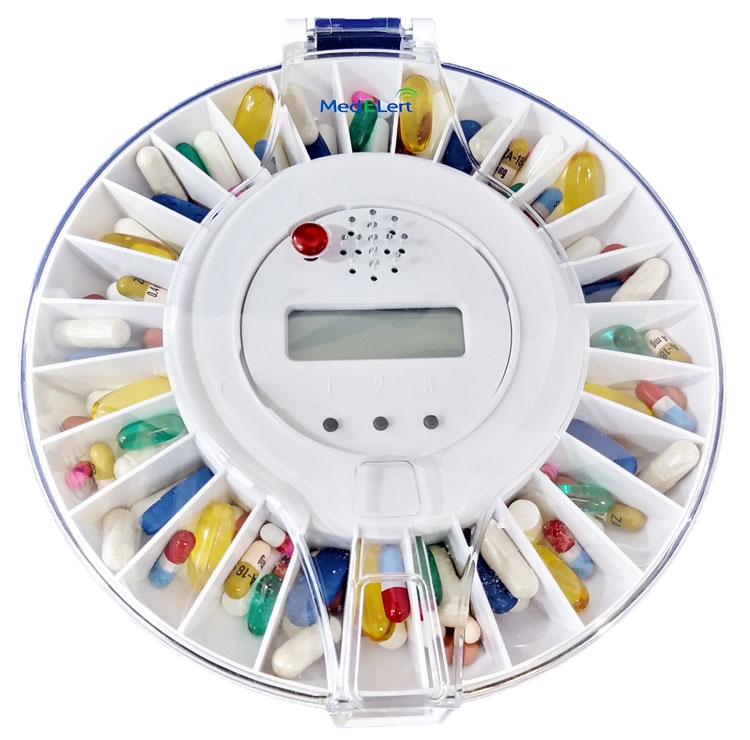
The Med-E-Lert Automatic Pill Dispenser has a locking cover to help keep medications secure between doses. The tray includes 28 compartments, which allows several scheduling patterns, from once daily for 28 days to up to six dosing times per day for four days. Interchangeable dosing rings serve as guides when planning the schedule. Each compartment can hold up to 15 aspirin-sized tablets./p>
The unit is battery-operated and portable. Up to six alarms can be set to match the prescribed dosing times. When an alarm sounds, it continues until the device is turned upside down or until 30 minutes have passed. Turning the unit over dispenses the contents of the active compartment through the opening.
Strengths: Lockable cover, multiple daily alarms, automatic advancement of preloaded doses, battery powered, portable.
Weaknesses: No phone connectivity, requires time set aside for loading the tray in advance.
This type of dispenser is often selected for individuals who prefer to manage medications independently but benefit from clear reminders and controlled access to doses.
Once-a-day organizers
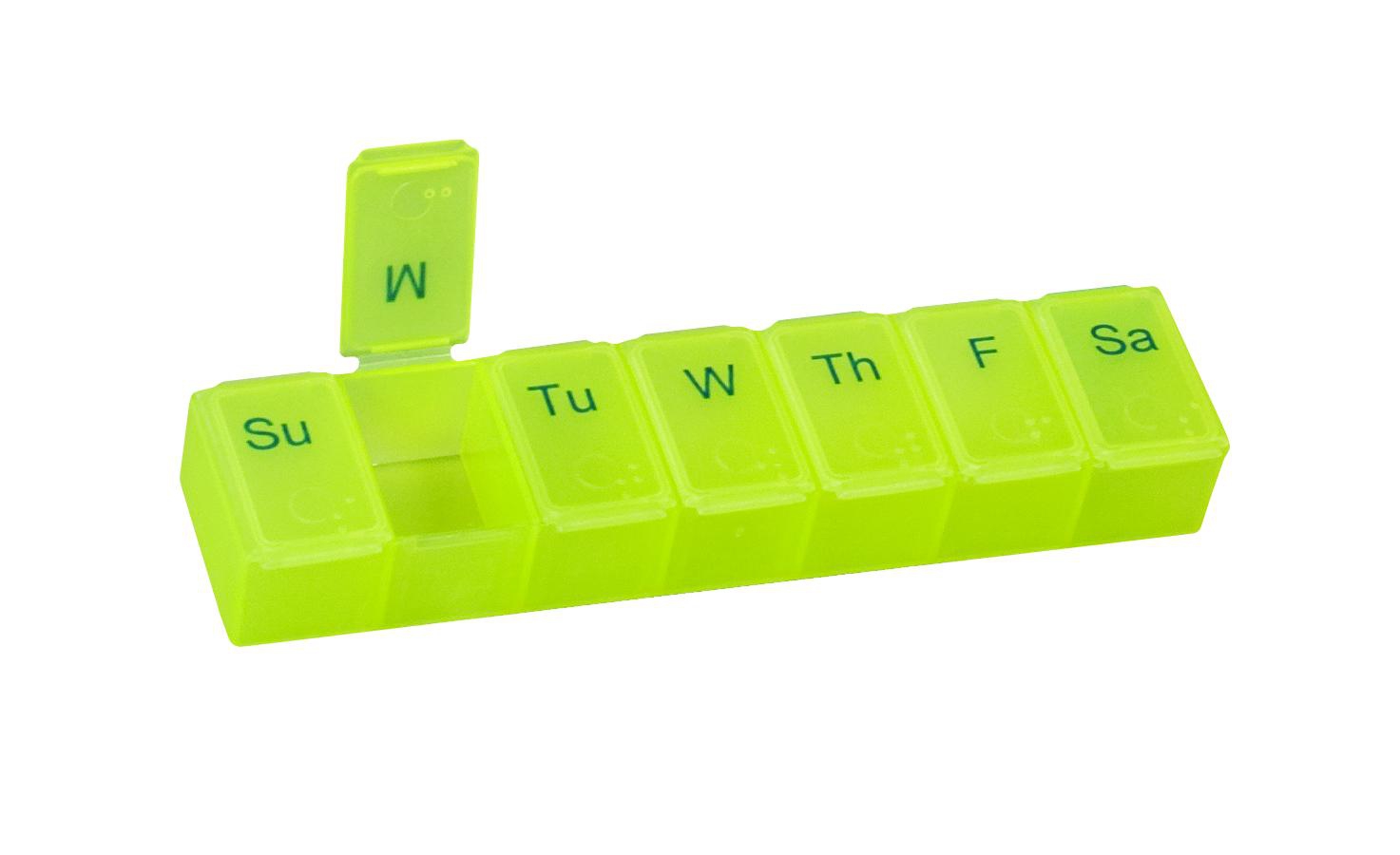
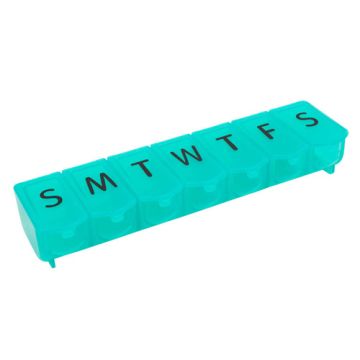
The Acu-Life 7-Day Pillbox Organizer provides one compartment for each day of the week. Permanent labels identify the days, and the clear plastic construction makes it easy to see which doses are loaded. A quick glance shows whether a day’s compartment has been used or still contains pills.
Strengths: Simple layout, easy visual check, compact and easy to carry.
Weaknesses: Some users may find the lids harder to open, no locking feature, no reminder system, all daily pills must fit in a single compartment.
This style works well for straightforward regimens where medications are taken once per day at a consistent time.
For active individuals, the 7-Day Detach N' Go Pill Organizer offers added flexibility. Each contoured compartment holds up to 25 aspirin-sized pills, and the shape supports easier removal. Individual day modules can be detached and carried separately.
Strengths: Detachable daily compartments, option to carry only the needed day, contoured shape for easier pill removal.
Weaknesses: Individual units may be easier to misplace, no reminder features, requires weekly reloading.
This organizer is suited to once-daily regimens where portability is important.
Twice-a-day organizers
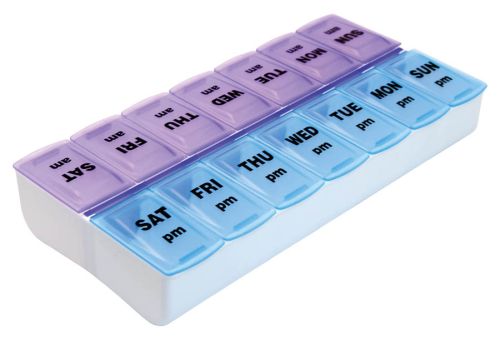
For schedules that include morning and evening doses, the Weekly Twice-a-Day Pill Organizer by Carex offers separate compartments for each time of day. The planner has 14 large compartments with a contoured design to help with pill removal. Lids in two different colors distinguish between morning and evening doses, and each lid is labeled. Semi-transparent tops allow a quick visual check.
Strengths: Separate morning and evening sections, clearly labeled lids, large compartments, easy access to contents.
Weaknesses: Requires weekly loading, no locking feature, no reminder system.
This organizer is appropriate for individuals who take medication twice daily and can remember dosing times without alarms.

The 7-Day AM/PM XL Detach N' Go Pill Organizer is designed for those who frequently travel or leave home during the day. Removable day modules hold both morning and evening doses. Color-coded lids distinguish AM from PM, and see-through tops help verify whether pills have been taken.
Strengths: Portable daily units, separation of morning and evening doses, easy visual adherence check.
Weaknesses: Daily modules can be misplaced, no locking system, no reminder features.
This organizer suits twice-daily regimens in individuals who lead active lives and prefer to carry only one day’s supply at a time.
Four-times-a-day organizers
More complex regimens sometimes require doses in the morning, at midday, in the evening, and at bedtime. Four-times-a-day organizers typically provide seven trays, each with four compartments, covering an entire week. Many designs allow the trays to slide out of a base for easier filling and transport.
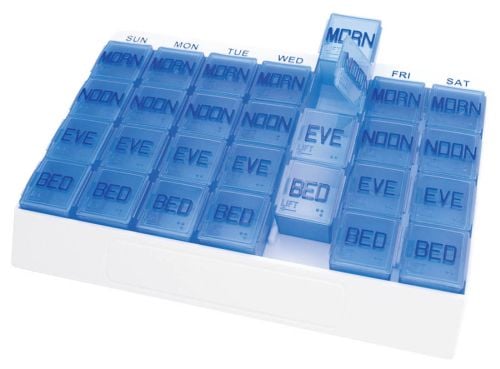
For a weekly planner with four dosing times per day, the offers a structured layout. Each compartment is labeled with the day of the week and time of day. Trays slide out of the base and can be carried in a bag, briefcase, or purse.
Strengths: Large capacity for multiple pills, removable trays for travel, easy-to-open lids that remain closed during transport.
Weaknesses: Requires filling 28 smaller compartments each week, no locking mechanism, interior compartments are harder to access without removing the tray.
This organizer is designed for individuals who take medications several times per day and prefer a single weekly system to manage all doses.
Pill cutting and crushing
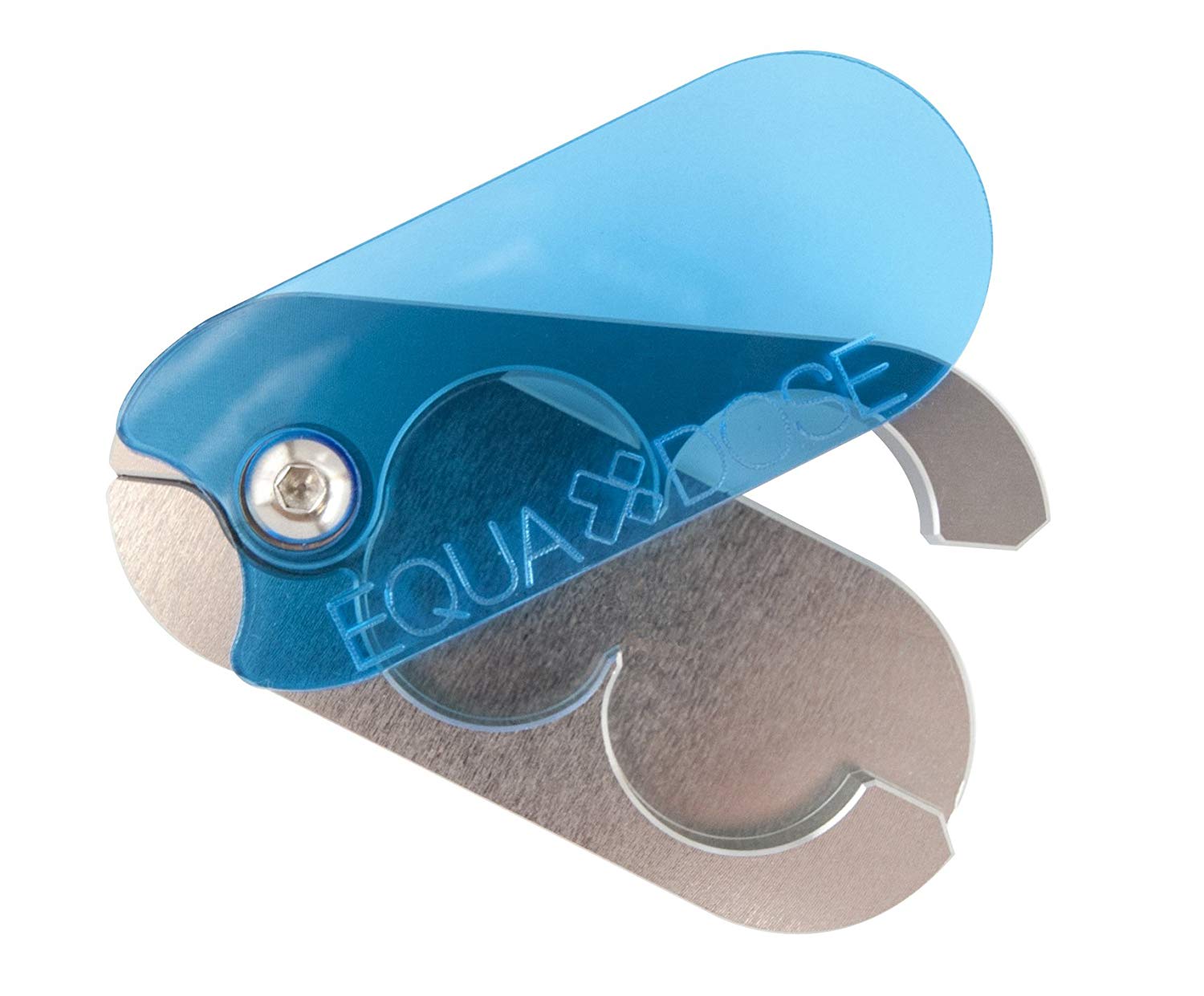
Some regimens require tablets to be split or crushed. Using a dedicated cutter or crusher can produce more even results than cutting by hand. With some basic cutters, tablets may crumble or break unevenly, which can affect dosing accuracy.
The Equadose Pill Cutter Splitter is designed to divide tablets into more uniform halves while limiting excess powder. The tablet shape is preserved as much as possible.
When tablets need to be reduced to a powder, a dedicated medication grinder, such as the Equadose Medication Grinder, can simplify the task. A pharmacist or prescriber should confirm which medications can be safely split or crushed.
Selecting a pill organizer may seem straightforward, but choosing a style that does not match the user’s routine can lead to frustration. An organizer that fits dosing frequency, lifestyle, and memory needs is more likely to support consistent use.
Medical studies
-
 Kleinsinger, F, MD. (2018).
The Unmet Challenge of Medication Nonadherence.
The Permanente Journal, 22(3), 18-033.
Kleinsinger, F, MD. (2018).
The Unmet Challenge of Medication Nonadherence.
The Permanente Journal, 22(3), 18-033.
-
Mongkhon, P, Ashcroft, D, Scholfield, C, & Kongkaew, C.
Hospital admissions associated with medication non-adherence: a systematic review of prospective observational studies.
BMJ Journals, 27(11).
-
Brown, M, MD. & Bussell, J, MD (2011).
Medication Adherence: WHO Cares?.
Mayo Clinic Proceedings, 86(4), 304-314.
-
Boskovic, J, et al. (2013).
Patient self-reported adherence for the most common chronic medication therapy.
Sage Journals, 41(4).

Login and Registration Form