TL;DR
An alternating pressure mattress can be a strong option for home use when pressure relief becomes more important than basic comfort alone. It changes support across the surface over time, which may help when a person spends longer hours in bed, has limited mobility, or needs more than a standard foam mattress can provide.
The tradeoffs matter too. Pump noise, motion during sleep, setup, power dependence, and cost can make an alternating pressure mattress feel like more than some households need. The right choice depends on how much time is spent in bed, how important pressure redistribution has become, and whether a better foam surface may still be enough.
Jump To A Section
- Quick Answer
- How an Alternating Pressure Mattress Works
- Main Advantages in Home Care
- Main Tradeoffs in Home Use
- Who May Be a Good Fit
- Who May Not Need One Yet
- Product Examples for Home Use
- Common Buyer Mistakes
- Final Takeaway
The pros and cons of using an alternating pressure mattress come down to one main question. Is the added therapy and complexity worth it for the person using the bed at home? That answer to this question depends on the time spent in bed, the user's mobility, pressure buildup concerns, and whether a standard foam surface still does the job.
An alternating pressure mattress is often considered when pressure relief becomes more important than simple cushioning. The patient and caregiver also have to consider sleep quality, caregiver practicality, setup, noise, motion, and whether the added system makes daily care easier or harder.
Quick Answer
| Situation | Alternating Pressure May Make Sense | A Foam Surface May Still Be Enough |
|---|---|---|
| Long daily bed use | Often yes | Sometimes not enough |
| Limited mobility | Often yes | Less likely |
| Lower-risk user | Maybe not needed | Often yes |
| Main issue is comfort only | Sometimes too much | Often yes |
| Higher concern around pressure buildup | Usually yes | Sometimes not enough |
| Need for a simple setup | May feel too complex | Often easier |
How an Alternating Pressure Mattress Works
An alternating pressure mattress uses air cells or air chambers that inflate and deflate in a repeating pattern. That alternating pressure cycle changes support across the sleep surface over time rather than keeping the same areas under the same level of pressure. In home care, the main reason for that design is to help reduce prolonged pressure in one area.
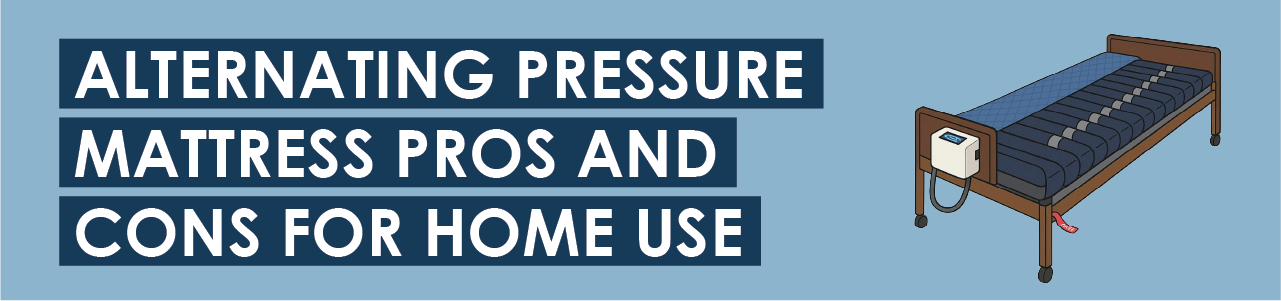
Unlike a foam surface, a hospital bed alternating pressure mattress relies on a pump, control unit, hose connections, and an inflation system to shift support from one section of the mattress to another. Some systems come as a mattress overlay that sits on top of an existing bed surface, while others are full replacement mattress systems designed to take over the full support role.
This design is used in pressure-management setups because it changes support across the surface through the day and night. That difference is what sets it apart from a standard foam mattress or a simple topper.
Main Advantages in Home Care
The main advantage of an alternating pressure mattress for home use is pressure redistribution. By shifting support over time, it can help reduce prolonged pressure in one area and may be a stronger fit for people who spend longer hours in bed and are vulnerable to pressue sores.
- Redistributes pressure over time
- Changes support across the surface
- May help when bed use becomes longer
- Adds therapy beyond static foam
- Can serve as a stronger next step than a simple overlay
- May fit homecare pressure mattress needs better than standard foam alone
For some users, the biggest benefit is not that the mattress feels softer, but skin health by preventing pressure-related sores. In home care, when the patient is either on bed rest, has limited mobility, or has greater concern around pressure points, it is essential that the support keeps changing and pressure is redistributed.
Main Tradeoffs or issues in Home Use
The tradeoffs are what make this decision less obvious than a product feature list suggests. An alternating pressure mattress may introduce pump noise in the bedroom, create motion during sleep, and require power and setup. Those factors can matter just as much as pressure relief in a home setting, where quiet sleep, simple maintenance, and ease of use are often part of the real buying decision.
Power dependence is another factor. An alternating pressure mattress requires power. It includes a pump, power cord, and control unit. If the bed does not have access to a power outlet, this may be an issue if the room setup does not allow for other configurations.
- Pump noise
- Motion or changing feel during sleep
- Setup and maintenance needs
- Power dependence
- Higher cost than many standard foam options
- More equipment in the bedroom
That is why the added function may not feel necessary in every situation. For some people, a supportive foam mattress still covers the real need without adding a powered system or require extra components that need monitoring.
Who May Be a Good Fit
An alternating pressure mattress for home use may be a good fit for people with limited mobility, longer bed rest, or a higher concern around pressure buildup. It may also fit care situations where a standard foam mattress no longer seems like enough support for how the bed is being used each day.
In practical terms, this type of medical air mattress for homecare can make more sense when the household needs more than a simple comfort upgrade. If the bed has become part of a longer daily care routine and the concern is no longer just firmness, the added therapy may be worth the tradeoff.
| Homecare Factor | Why It May Support an Alternating Pressure Choice |
|---|---|
| Limited mobility | Pressure redistribution may matter more over time |
| Longer bed rest | A changing support surface may be worth the added system |
| Concern around pressure buildup | The mattress is designed to shift pressure across the surface over time |
| Foam no longer feels like enough | A powered hospital bed mattress may be the stronger next step |
Who May Not Need or Benefit From Alternating Pressure
Not every homecare bed setup needs a powered pressure mattress. Lower-risk users, people with shorter bed use, or shoppers mainly looking for comfort rather than pressure redistribution may not need one yet. In those cases, a better foam surface may still be enough and may offer a simpler, quieter solution.
This is often where the question of whether an alternating pressure mattress is worth it at home. If the main issue is that the bed feels too firm or the user wants a softer feel, a foam vs alternating pressure mattress comparison may point toward foam first, not air. The extra system can be unnecessary for lower-risk users if the real need is comfort rather than active pressure management.
- Lower-risk users
- Shorter daily bed use
- Shoppers focused mostly on comfort
- Households that want a simpler setup
- Situations where a better foam surface still matches the need
- Cases where complexity outweighs the benefit
That does not make an alternating pressure mattress a poor product. It only means the decision should match the actual care routine. The right answer is not always the most advanced technology. It is the product type that fits the daily demands of the bed.
Product Examples for Home Use
Product examples help show how alternating pressure products can fit different homecare situations. The goal is to connect each product type to a practical home-use need.
Entry-Level Alternating Pressure Option
Med-Aire 14027 can serve as a full-system example for households that need a powered replacement surface and want pressure redistribution as part of the daily setup. It fits better when foam no longer feels like enough and the bed is used for longer periods.
Alternating Pressure and Low Air Loss Combo Option
Med-Aire 14029 is a useful example when the comparison needs to include both alternating pressure and low air loss system features. This type of therapeutic air mattress can make sense when households want pressure redistribution along with added airflow-related support.
Overlay-Style Powered Option
Med-Aire Pump and Pad System shows how an alternating pressure pad system can work as a mattress overlay rather than a full replacement mattress. This type of setup may fit homes that want powered pressure support without replacing the full bed surface first.
Higher-End Combo System
Protekt Aire 3000 is a stronger example of a medical mattress pump system that sits further into the powered support category. It helps illustrate that not all alternating pressure systems are equal in function, setup, or likely home-use fit.
Common Buyer Mistakes
- Buying for features without matching the actual need
- Ignoring pump and sleep tradeoffs
- Treating all alternating pressure systems as equal
- Assuming powered support is always the next step
- Focusing only on price or only on technology
These mistakes matter because the best hospital bed air mattress for one household may be the wrong fit for another. A buyer may focus on the fact that the mattress is powered, but not on whether the user actually needs active pressure redistribution. Another common miss is ignoring the effect of pump noise, motion, and setup on sleep and daily care routines.
It also helps to avoid treating every alternating pressure mattress system the same. Some are overlays. Some are replacement surfaces. Some combine alternating pressure with low air loss mattress features. The details affect how the system feels, how it is used, and whether it fits the homecare setup.
Final Takeaway
An alternating pressure mattress can be worth it in a homecare setup when pressure redistribution has become more important than comfort alone. That is most likely when mobility is limited, bed use is longer, and a standard foam surface no longer seems like enough.
The tradeoffs still matter. Pump noise, motion, setup, power dependence, and cost can make a powered pressure mattress feel like more system than some households need. The right fit depends on mobility, time in bed, skin-risk concerns, and whether foam still meets the need. When those pressures are increasing, the benefits may outweigh the tradeoffs. When they are not, a better foam surface may still be the more practical choice.

Login and Registration Form