Quick Summary:
Burns are damage to skin and tissue as a result of overexposure to the sun, flames, chemicals, steam, etc. The severity of the burn is separated into three classifications: first, second, and third.
Understanding the difference between first, second, and third-degree burns will help both patients and caregivers safely manage the treatment of the wound. Each burn classification needs different levels and types of care to heal.
The purpose of this guide is to define and identify the different burn classifications, the corresponding treatment and care, and suitable medical supplies to aid healing.
Click a link to jump to the section.
1. Understanding the Degrees of Burns
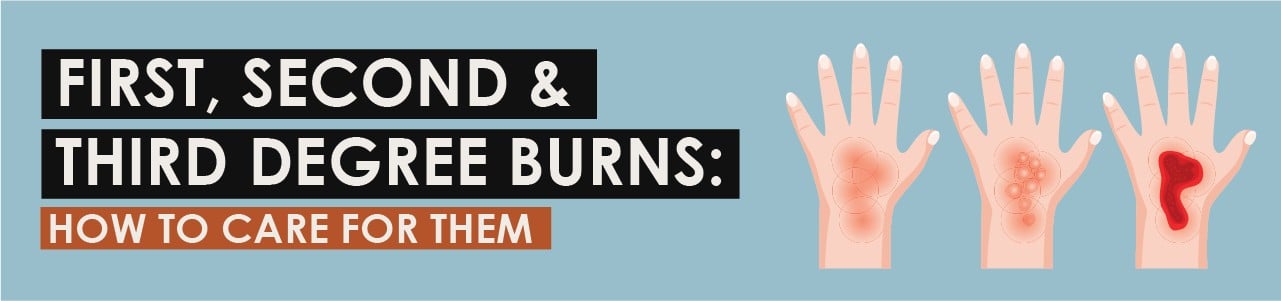
First-degree burns: Also known as an epidermal burn. They affect only the epidermis, or the outer layer of the skin. They can be identified by redness of the skin, mild pain, and no blistering. The skin may also be dry and itchy. An example of a first-degree burn is a mild sunburn.
Second-degree burns: Also known as a partial-thickness burn. These go beyond the epidermis to the next layer of skin, the dermis. Second-degree burns are more painful and will present swelling and some blistering. The skin may also take on a spotted appearance.
Third-degree burns: Also known as a full-thickness burn. These consist of damage to all skin layers, sometimes even deeper tissues. The skin will appear brown, white and leathery, or black and charred. These burns can either be highly painful, or if the nerves have been damaged, they can be completely painless.
To determine the type of care your burn needs or the urgency of professional medical attention, accurate burn classification is key.
First-Degree Burn Care
For first-degree burns, treatment can be done at home with the right products and procedures. Here are some guidelines on what to do if you sustain a first-degree burn:
- Run the burned area under cool water for 10-20 minutes.
- Gently dry the skin, then apply a soothing gel or non-adherent dressing.
- Avoid using ice or greasy substances, as this can increase pain and further damage the skin.
Vitality Medical offers a variety of effective products for mild burn care, including aloe-based hydrogel and cooling burn
Second-Degree Burn Care
To prevent infection and support healing, second-degree burns need gentle treatment and care.
Moderate burn care can be done by cleaning the wound and applying appropriate dressings. Follow these steps below if you have a second-degree burn:
- Clean the area with a saline or cleanser.
- Dress the wound, either with a dressing, dressing, or wound dressing.
- Keep the wound clean and dressed to help reduce the risk of infection.
- For best results, clean and re-dress the wound as often as directed by the dressing manufacturer or your healthcare provider.
For second-degree burns, the risk of skin scarring and wound contamination is higher than with first-degree burns. To minimize this risk, avoid breaking or popping any blisters. Keep an eye on the wound to check for signs of infection, like skin redness or wound drainage. If you notice any of these signs, seek help from a medical professional.
Moderate to large burns or burns on the face, hands, or joints should also be evaluated by a medical professional.
Third-Degree Burn Care
Third-degree burns are medical emergencies and always require professional treatment. If you notice any symptoms of a third-degree burn, seek immediate medical attention. You may be admitted to the hospital upon evaluation.
Hospital burn treatment can include debridement, skin grafting, moist wound healing, and application of advanced dressings.
Debridement consists of the removal of damaged tissue. In the case of a third-degree burn, this can look like cleaning the wound and removing any tissue damaged by the burn.
Skin grafting is the transfer of healthy skin from a donor site (either your own or from another source) to the damaged area. If you are providing your own donor skin, it may come from areas like the thighs, abdomen, back, or another area at the discretion of your doctor.
Moist wound healing involves keeping the wound at an optimal moisture level to accelerate healing and reduce pain and scarring. Your provider may apply an ointment or petroleum jelly to the wound and then cover it with an advanced dressing.
Once you are cleared for home care, it is important to follow your doctor’s advice. For home treatment, consider using a non-adherent dressing like the or
2. Preventing Infection and Supporting Healing
Burn wound hygiene is an integral part of the healing process after sustaining a burn. Keeping wounds clean and covered is essential for helping the wound to heal more quickly and properly. For best results, using the right kind of dressings and supplies will help, too.
Antimicrobial Dressings: are specially designed to prevent wound infection by killing bacteria that form in the wound.
Topical Antiseptics: can be applied directly to the skin to kill bacteria that may appear.
Moisture-Retentive Coverings: help retain moisture on the burn wound. Keeping the wound moist reduces pain and helps it heal faster. They include foam dressings, hydrocolloids, and more.
Be sure to also stay hydrated and maintain a balanced diet, as that can help aid the skin regeneration process and accelerate healing.
3. When To Seek Medical Attention
There are some burns that, no matter the degree or classification, will always need professional care.
Seek help from a medical professional when you have:
- A burn larger than 3 inches in diameter or larger than the palm of your hand
- A burn on the face, hands, genitals, or major joints
- Signs of infection (swelling, pus, odor, fever, spreading redness, increased pain)
- Third-degree burns
- Chemical and electrical burns
Emergency burn care and large burn evaluation must be conducted only by a medical professional. This will ensure appropriate treatment and reduce the risk of healing complications.
Conclusion
Properly identifying your burn degree and using correct burn care practices will help with safe wound recovery and improve the healing outcome. This means seeking timely treatment, the right infection control supplies, and professional medical attention when necessary. For all your burn care needs, whether for burn dressings, wound gels, or home recovery supplies, Vitality Medical can be your trusted source.

Login and Registration Form