Quick Summary:
Add a quick summary introduction. The header and text box can be deleted if it's not necessary
Click a link to jump to the section.
- What Is Durable Medical Equipment?
- Common Types of Durable Medical Equipment
- How DME Is Used in Home and Clinical Settings
- Durable Medical Equipment vs. Disposable Medical Supplies
- Factors That Affect DME Selection
- Maintenance, Replacement, and Long-Term Use Considerations
- Safety and General Care Considerations
Introduction
Durable medical equipment (DME) is a foundational part of modern home health care. It provides the necessary tools to support patients in mobility, everyday tasks, and other ongoing care needs. It can help elevate the quality of life for those who feel limited by their conditions by providing more independence, mobility, and reducing strain on caregivers.
This page will provide a durable medical equipment overview, including home health equipment suggestions for long-term care planning.
What Is Durable Medical Equipment?
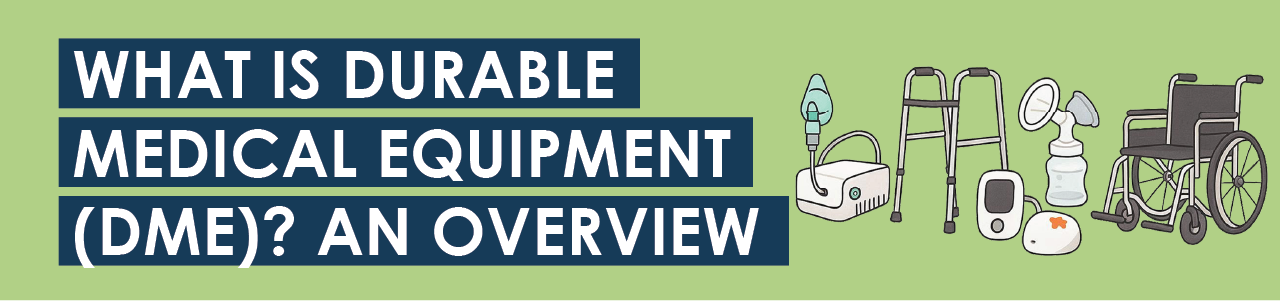
DME Definition: Durable Medical Equipment is a reusable medical device or piece of equipment that is expected to last at least three years. It is meant to treat long-term illness and injury.
Durable medical equipment is a non-disposable medical device. This is so the equipment can be used repeatedly over the course of three or more years. Disposable supplies, while great for maintaining sterility and easy to clean up, often cannot be used more than once. This makes DME especially important for extended care in the home and care facilities.
Why DME Classification Is Important
Classifying something as durable medical equipment is important for determining if the equipment will be covered by insurance (either Medicare or your own marketplace insurance). Not only does it need to meet the defined requirements mentioned above, but it also often needs:
- A prescription from your provider
- Your provider’s confirmation that the equipment is necessary to treat your condition or injury
- Some items require an additional doctor’s visit within 6 months of ordering the equipment
- The supplier must be Medicare-approved
Common Types of Durable Medical Equipment
Durable medical equipment commonly includes mobility aids, respiratory equipment, home care beds, and patient transfer equipment. For example, check out this Full Electric Bariatric Bed.
Here are some more examples of durable medical equipment.
Mobility Aids:
- Walkers and rollators
- Wheelchairs
- Mobility scooters
Respiratory Equipment:
- Nebulizers
- CPAP machines
- Oxygen concentrators
Home Care Beds:
- Alternating pressure mattresses
- Hospital beds
- Bariatric mattresses
Patient Transfer Equipment:
- Patient lifts
- Transfer chairs
- Wheelchair lifts
How DME Is Used in Home and Clinical Settings
Durable medical equipment is most commonly used in the home for long-term or indefinite care. It can also be used in facilities or wherever the patient stays.
Long-term care equipment is meant to aid caregivers and patients in their daily living. For example, a patient who has limited mobility may need a scooter or wheelchair to make getting around the house easier. A diabetic person will need a blood sugar monitor.
Setup, storage, and space are also factors in home medical equipment use. When considering what kind of DME is right for you, think about whether you have the necessary space, time, and help for it.
Durable Medical Equipment vs. Disposable Medical Supplies
While durable medical equipment is designed to last years and is essential for long-term home care, disposable medical supplies can also aid in day-to-day care.
Disposable supplies are meant for single use, meaning they are thrown away once the task is done. They are also often ready to use immediately, whereas DME can sometimes take time to set up.
Such disposable medical accessories can include:
- Gloves
- Bandages
- Syringes
Long-term patient care needs both durable and disposable supplies. While the DME provides multiple uses and lasts longer, disposable supplies maintain a sanitary environment.
Factors That Affect DME Selection
Choosing which DME is right for you or your patient will depend on the patient’s mobility needs, other needed physical support, and how often you might need it throughout the day. Whether extra help–a caregiver, healthcare staff, or loved one–is needed will also be a factor in deciding equipment compatibility with a patient’s care.
For example, if a patient has limited mobility, they may opt for a scooter. Scooters can sometimes have a simple setup and do not often require aid to use them. They can also be stored in many places in the home.
On the other hand, a patient may consider a hospital bed to help them reposition every few hours. Hospital beds require enough space, are a little more complicated to set up, and often require additional help to do so. The patient may also need additional caregiver handling to reposition on the bed.
Maintenance, Replacement, and Long-Term Use Considerations
Part of acquiring durable medical equipment means understanding that it will require routine inspections, maintenance, and possible replacement parts throughout the equipment’s lifespan.
To get the most out of your DME, it is best to regularly inspect your equipment to make sure it is at full functioning capacity. This way, you can perform or request the proper maintenance to keep the equipment running to its full potential.
Some DME maintenance can be performed by either the patient or caregiver, but some may require professional assistance. For example, a patient lift may require the skills of a professional technician to fix any possible malfunctioning electrical components.
While DME is expected to last at least 3 years, the lifespan of the product will depend on its type, model, and manufacturer. Some equipment might last around 5 years, and others may last as long as 10 years. Regardless, it is essential to replace any parts or upgrade your equipment as needed to ensure you have the right care.
Safety and General Care Considerations
Safe equipment use is of utmost importance with DME. If used incorrectly, you can damage the equipment or even hurt yourself. For injury prevention, review the manufacturer's guidelines on proper equipment storage and use.
Do not try to guess how to use, assemble, or store your DME. When in doubt, consult the user instructions or contact the manufacturer for help.
Conclusion
Durable care equipment is a wonderful daily living support that can enhance your life and increase your independence. It can become an integral, yet seamless part of your daily routine.
Remember: seeking the right DME and disposable supplies will be the best way to enhance your care.

Login and Registration Form