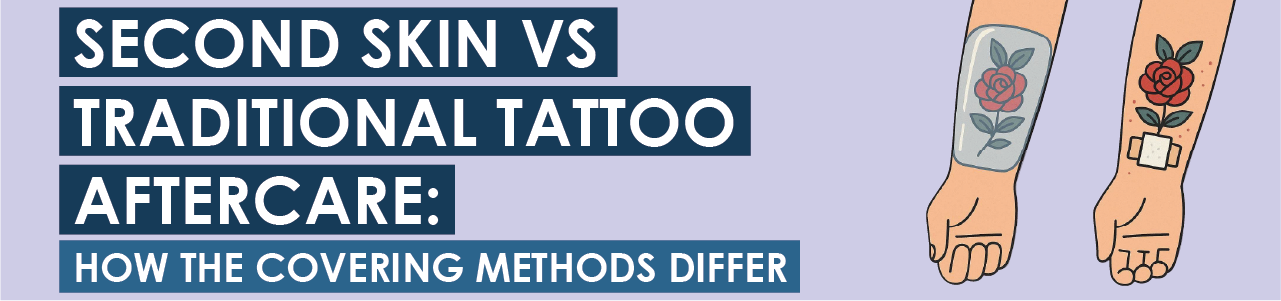
TL;DR: Second skin keeps a fresh tattoo beneath transparent adhesive film while the seal remains intact. Traditional aftercare removes the initial covering and relies on cleansing, pat drying, light moisturizing, and friction control. The better fit depends on the tattoo artist’s instructions, drainage, placement, adhesive sensitivity, and the exact product used.
Second skin and traditional aftercare use different methods to manage a fresh tattoo. Neither is automatically better. The decision depends on the tattoo, the wearer, and whether the selected covering is suitable for the intended use.
Jump to a Section
- Second Skin and Traditional Aftercare at a Glance
- Wear Time, Fluid, and Seal Integrity
- Understanding the Covering Options
- Selection, Sensitivity, and Removal
- Choosing Between the Two Methods
- When to Seek Professional Guidance
- Bottom Line
Second Skin and Traditional Aftercare at a Glance
| Decision Area | Second Skin | Traditional Aftercare |
|---|---|---|
| Protection | Transparent adhesive film remains over the tattoo. | The initial covering is removed and the tattoo is cared for directly. |
| Daily Care | Monitor the fluid, edges, comfort, and seal. | Wash gently, pat dry, moisturize lightly, and reduce friction. |
| Drainage | Fluid may remain visible beneath the film. | Surface fluid is managed through cleansing and drying. |
| Main Concerns | Seal integrity, fit, drainage, and adhesive sensitivity | Cleanliness, moisture balance, and clothing friction |
Traditional care generally includes gentle cleansing, moisturizing, and avoiding unnecessary rubbing, scratching, or picking.2 Transparent film provides a surface barrier but does not absorb drainage like gauze or a padded dressing.
Wear Time, Fluid, and Seal Integrity
The studio covering may be plastic wrap, an absorbent dressing, tattoo-specific adhesive film, or another temporary product. These coverings do not share one wear or replacement schedule.
Wear Time Depends on the Product: Saniderm, for example, directs users to leave its first bandage in place for approximately 8 to 24 hours, depending partly on drainage.3 That timing should not be transferred to an unrelated film, plastic wrap, or non-adherent pad.
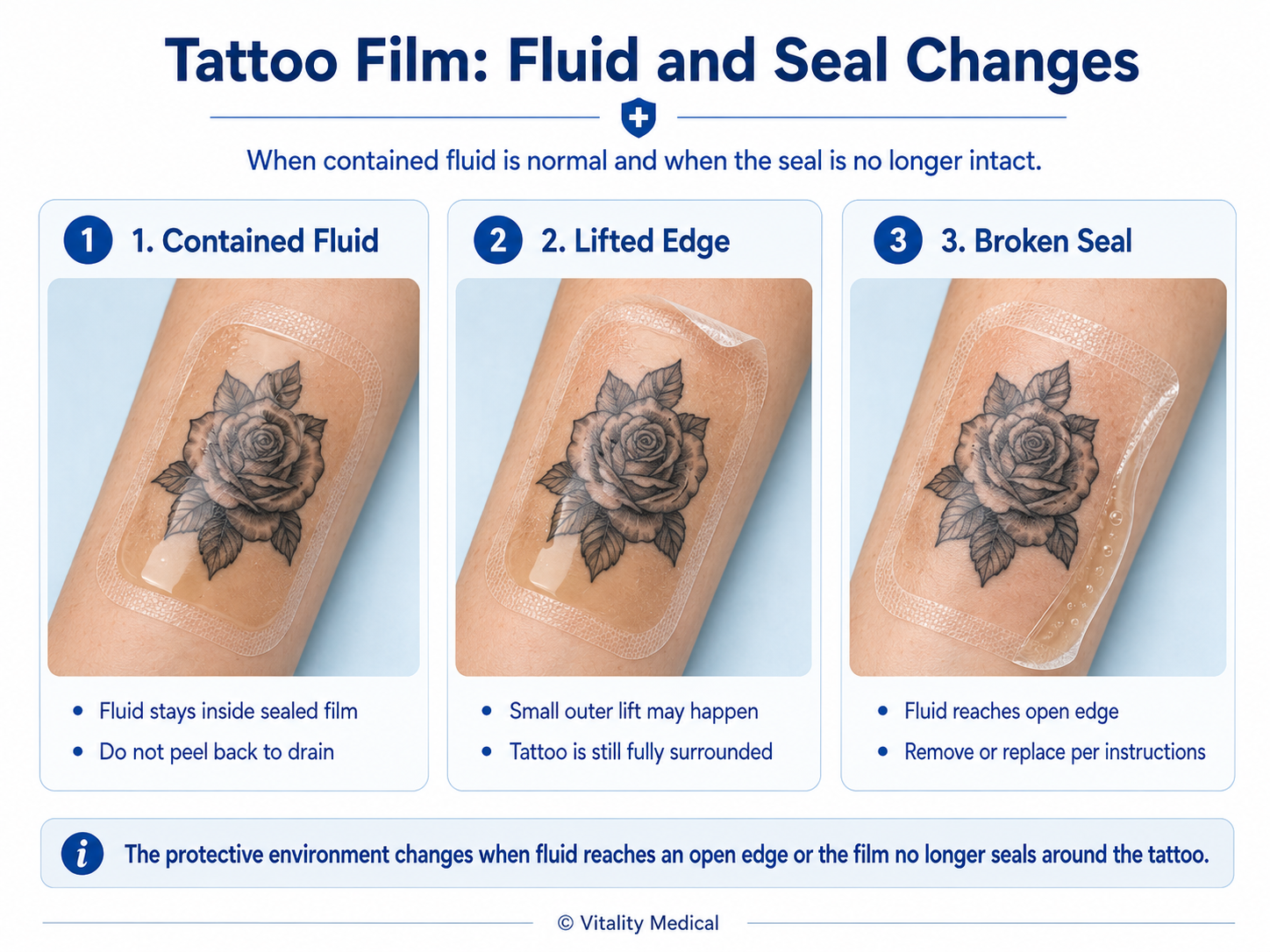
A fresh tattoo may release plasma, residual ink, and a small amount of blood. Beneath transparent film, that fluid can form a visible pocket.
Contained Fluid
What It Means: Fluid remains beneath an intact covering during early wear.
What to Do: Do not peel the film back to inspect, wipe, or drain it because that can weaken the adhesive border.
Lifted Edges
What It Means: A small lifted corner does not always mean the entire covering has failed.
What to Check: Confirm the tattoo is still surrounded by adhered film and fluid has not reached the lifted area.
Broken or Leaking Seal
What It Means: Fluid has reached an open edge, so the original seal is no longer intact.
What to Do: Follow the product instructions and ask the tattoo artist whether the covering should be removed or replaced. Saniderm advises replacement when pooling compromises adhesion or its seal breaks.4
Understanding the Covering Options
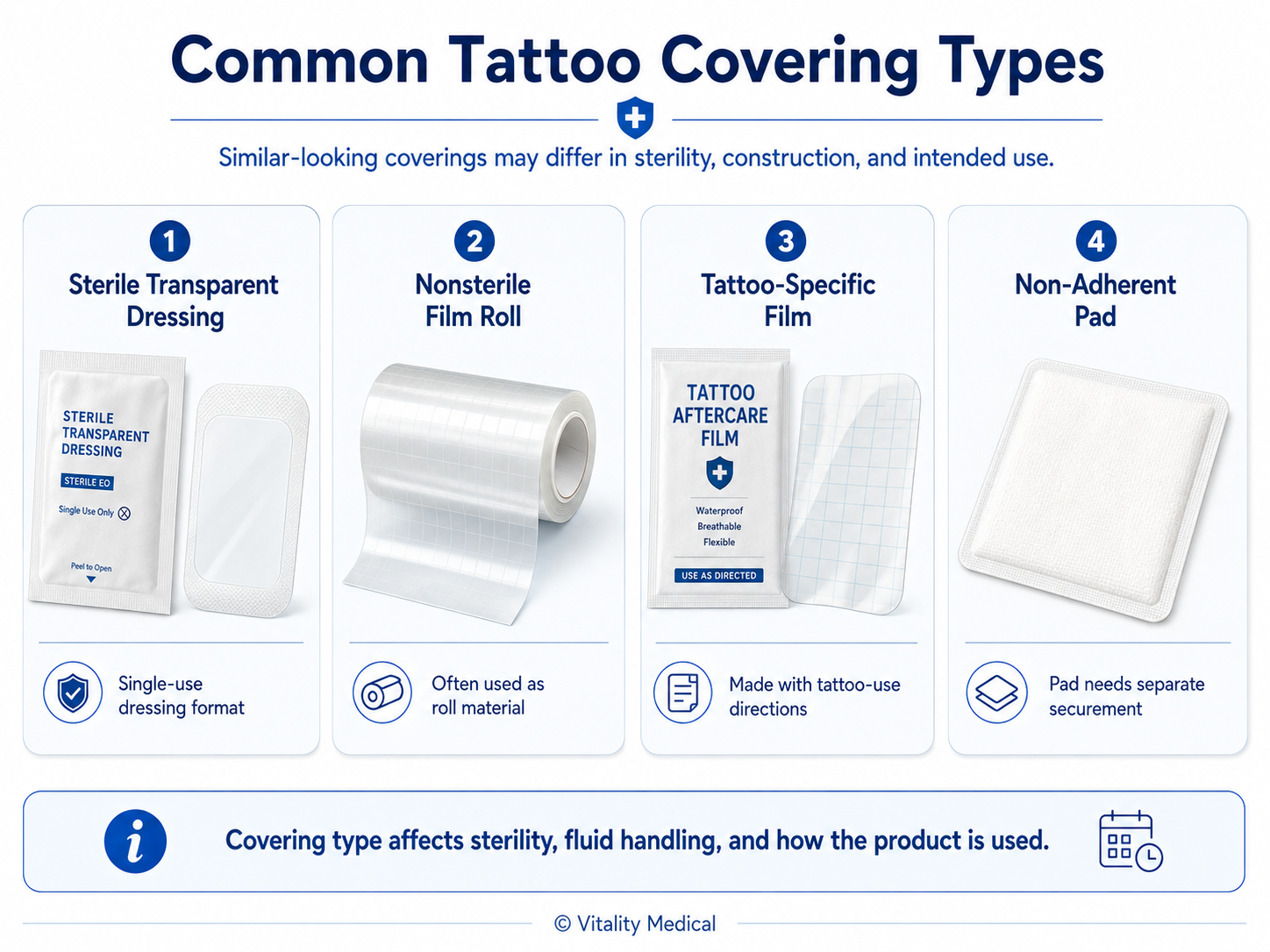
Similar-looking coverings may differ in sterility, construction, fluid management, and intended use. “Second skin,” “clear film,” and “Tegaderm” should not be treated as interchangeable product names.
- Sterile Transparent Dressing: Individually packaged for dressing use according to the manufacturer’s indications.
- Nonsterile Film Roll: May be intended for intact skin, covering another dressing, or external waterproof protection.
- Tattoo-Specific Film: Includes its own tattoo application, wear, replacement, and removal instructions.
- Transparent Dressing With a Pad: Uses an absorbent or non-adherent center and manages fluid differently from plain film.
- Non-Adherent Pad: May absorb drainage and reduce sticking but requires separate securement and does not create a transparent film seal.
Solventum describes individually packaged Tegaderm Frame Style dressings as sterile, waterproof, breathable, and vapor-permeable.1 Tegaderm Transparent Film Roll is nonsterile and intended for uses such as protecting intact skin or covering another dressing.5
Relevant Supplies: View our complete selection of tattoo aftercare supplies, including transparent film dressings, sterile non-adherent pads, sterile gauze pads, hypoallergenic medical tape, cleansers, moisturizers, and adhesive-removal products.
Selection, Sensitivity, and Removal
Choose transparent film by reviewing the complete product description rather than relying only on appearance, brand family, or the word “waterproof.”
- Sterility and Intended Use: Confirm that the product is appropriate for direct dressing use.
- Size and Fit: The film should extend beyond every edge of the tattoo onto clean surrounding skin.
- Flexibility: Curved areas and joints may require greater conformability.
- Skin Sensitivity: Previous reactions to tapes or medical adhesives may affect the choice.
- Removal: Follow the manufacturer’s directions rather than pulling the film straight upward.
Redness, itching, or discomfort beneath or around the film may have several possible causes and should not automatically be diagnosed as an adhesive allergy. Do not place replacement film over an actively concerning reaction without professional guidance.
A compatible medical adhesive remover may help loosen some dressings or remove residue. It is not a treatment for redness, itching, or a rash.
Waterproof film does not make swimming or soaking appropriate. With traditional aftercare, loose clothing and reduced rubbing become more important because the tattoo is directly exposed to fabric and movement.
Choosing Between the Two Methods
Second Skin May Work Better When
The artist recommends a specific tattoo-film product.
The tattoo can be fully covered, and the film remains secure during movement.
An intact barrier would reduce direct clothing or environmental contact.
The wearer can monitor the seal and drainage.
Traditional Aftercare May Be Easier When
The wearer has a history of adhesive sensitivity.
The tattoo’s shape, placement, or movement makes it difficult to secure the film.
Drainage repeatedly compromises the covering.
The wearer prefers to manage cleansing, moisture, and friction directly.
Neither method is automatically safer or more effective. Follow the tattoo artist’s plan and the directions for the exact products involved.
When To Seek Professional Guidance
This article cannot determine whether a tattoo is infected, irritated, over-moisturized, or reacting to adhesive, ink, cleanser, lotion, or another product. The American Academy of Dermatology notes that tattoo reactions may appear immediately or develop later.6 Unexpected, worsening, or concerning changes to the skin should be evaluated by a healthcare professional.
Bottom Line
Second skin keeps a tattoo beneath transparent adhesive film while the seal remains intact. Traditional aftercare manages the tattoo through direct cleansing, pat drying, light moisturizing, and friction control. Follow the instructions for the exact product rather than assuming every clear film, Tegaderm product, plastic wrap, padded dressing, or non-adherent pad is interchangeable.
Related Guides in This Series
- What Does Normal Tattoo Healing Look Like?
- Second Skin vs. Traditional Tattoo Aftercare
- Is a Healing Tattoo Infected, Irritated, Over-Moisturized, or Reacting to Adhesive?
- Life After a New Tattoo: Showering, Sleeping, Exercise, Swimming, Work, and Sun
References
- Solventum. 3M Tegaderm Transparent Film Dressing Frame Style.
- Cleveland Clinic. Tattoo Aftercare: Instructions and Healing Tips.
- Saniderm. How Long Should I Keep Saniderm on My Tattoo?
- Saniderm. How to Take Care of a New Tattoo.
- Solventum. 3M Tegaderm Transparent Film Roll Application and Removal Guide.
- American Academy of Dermatology. Tattoos: Skin Reactions and What to Do About Them.

Login and Registration Form