TL;DR: A fresh tattoo may initially feel tender and appear mildly red or swollen. Some clear surface fluid may also appear. As the skin recovers, the tattoo may become dry, tight, itchy, flaky, lightly scabbed, or temporarily dull. Tattoo size, placement, shading, movement, friction, and individual skin characteristics can all affect how quickly those changes occur.
A new tattoo does not immediately look or feel like healed skin. Tattoo needles place pigment beneath the surface while repeatedly affecting the tattooed area, which begins a natural skin-repair process.
The visible changes usually shift as the surface recovers. Early tenderness, mild redness, slight swelling, and clear fluid may be followed by dryness, peeling, itching, light scabbing, and a temporarily cloudy appearance.
The process is not identical for every tattoo. A small line tattoo may look and feel different from a large, heavily shaded design, while placement can determine how much pressure, stretching, movement, or clothing friction the skin experiences.
Jump to a Section
- Tattoo Healing at a Glance
- Early Tattoo Healing
- Peeling, Flaking, and Itching
- Factors That Affect Tattoo Healing Time
- Temporary Changes in Tattoo Appearance
- When to Seek Professional Guidance
- Bottom Line
Tattoo Healing at a Glance
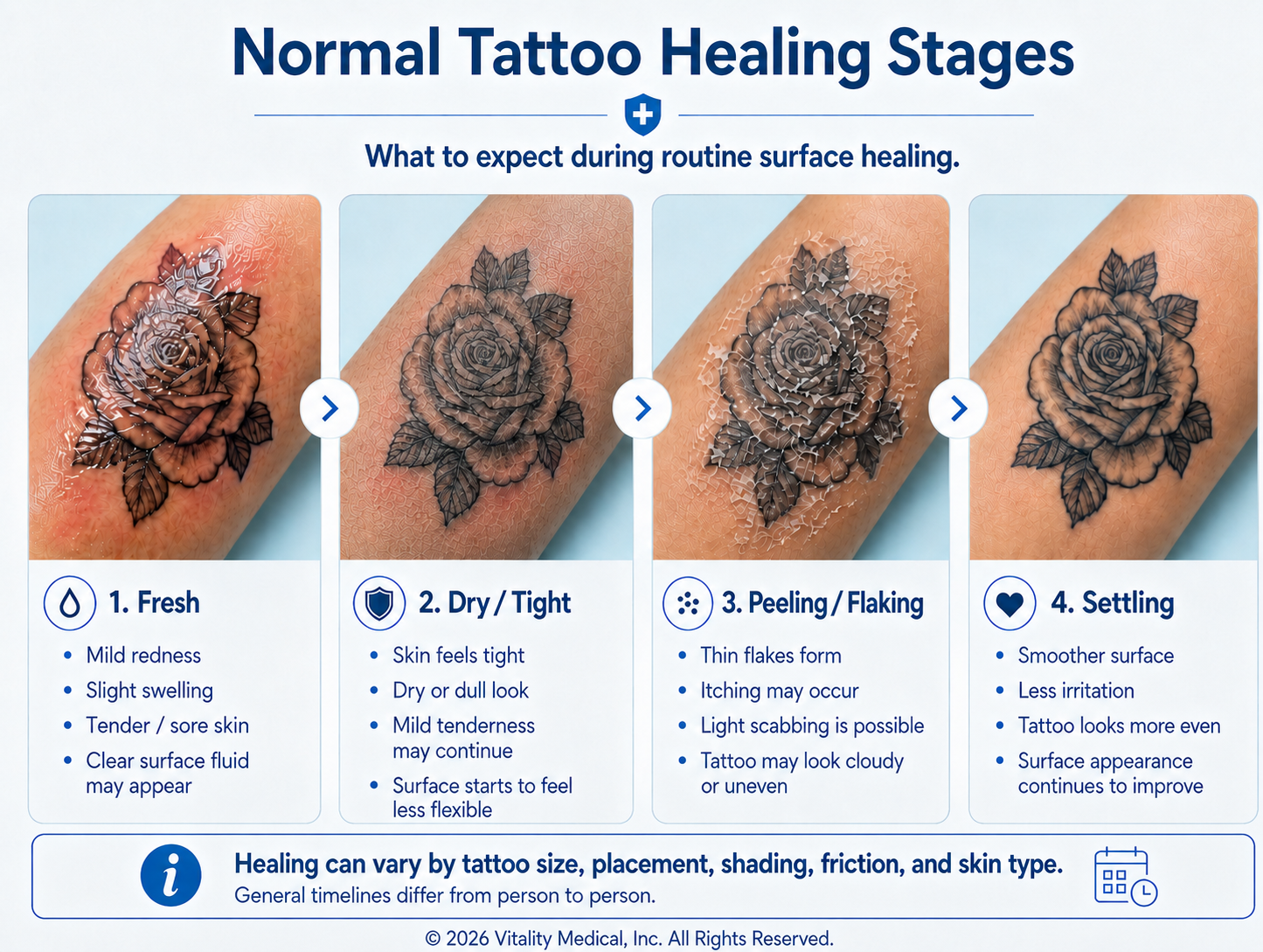
A healing tattoo commonly changes from tender and slightly swollen skin to a drier, tighter, and sometimes flaky surface. The tattoo may also look temporarily dull while dry or renewing skin remains over the ink.
| General Phase | What the Tattoo May Look Like | What the Skin May Feel Like | What Is Changing |
|---|---|---|---|
| Fresh Tattoo | Mild redness, slight swelling, or some clear surface fluid | Tender, sore, warm, or sensitive | The skin is beginning its early repair response. |
| Drying Surface | Less surface moisture and a tighter-looking texture | Tight, dry, or mildly uncomfortable | The outer skin begins drying and renewing itself. |
| Peeling and Flaking | Thin flakes, light scabs, or a cloudy appearance | Dry or itchy | Dry surface cells begin releasing naturally. |
| Smoother Surface | Less flaking and a more even appearance | More comfortable, although the skin may still feel different | Visible surface recovery continues while the tattoo settles. |
The American Academy of Dermatology identifies redness, swelling, soreness, clear fluid, itching, flaking, and scabbing as changes that may occur after tattooing.1 These are general descriptions and cannot confirm that a specific tattoo is healing normally.
Early Tattoo Healing
A permanent tattoo is created by repeatedly passing needles over the skin to place ink beneath the surface. Immediately afterward, the area may resemble irritated or scraped skin because it has recently experienced repeated needle contact.
Mild redness and swelling may be most noticeable around the freshly tattooed area. The skin may feel tender when touched, stretched, or pressed beneath clothing. Some clear surface fluid may also appear on the tattoo or beneath its initial covering.
These early changes generally shift as the surface begins drying. The tattoo may start to feel tighter, and the initial sensitivity may gradually give way to dryness or itching.
Important Context: General descriptions of redness, swelling, soreness, or surface fluid are not a way to diagnose an individual tattoo. A person concerned about how a specific tattoo looks or feels should contact a healthcare professional.
Peeling, Flaking, and Itching
Peeling occurs from the tattoo as dry outer skin begins shedding. Thin flakes may appear across the design, and some sections may develop small surface scabs. Areas with heavier shading or repeated needle work may not peel at the same time as lightly tattooed areas.
Dryness can also make the tattoo feel tight or itchy. Scratching may disturb skin that is still attached, while pulling at flakes or scabs can remove them before they are ready to release.
During this part of healing:
- Allow flakes and light scabs to separate naturally.
- Avoid scratching, rubbing, or pulling at the tattooed surface.
- Continue following the aftercare instructions provided by the tattoo artist.
The tattoo may look less colorful during active peeling because dry skin is temporarily sitting over the ink. That surface appearance is not the same as the tattoo’s final result.
Factors That Affect Tattoo Healing Time
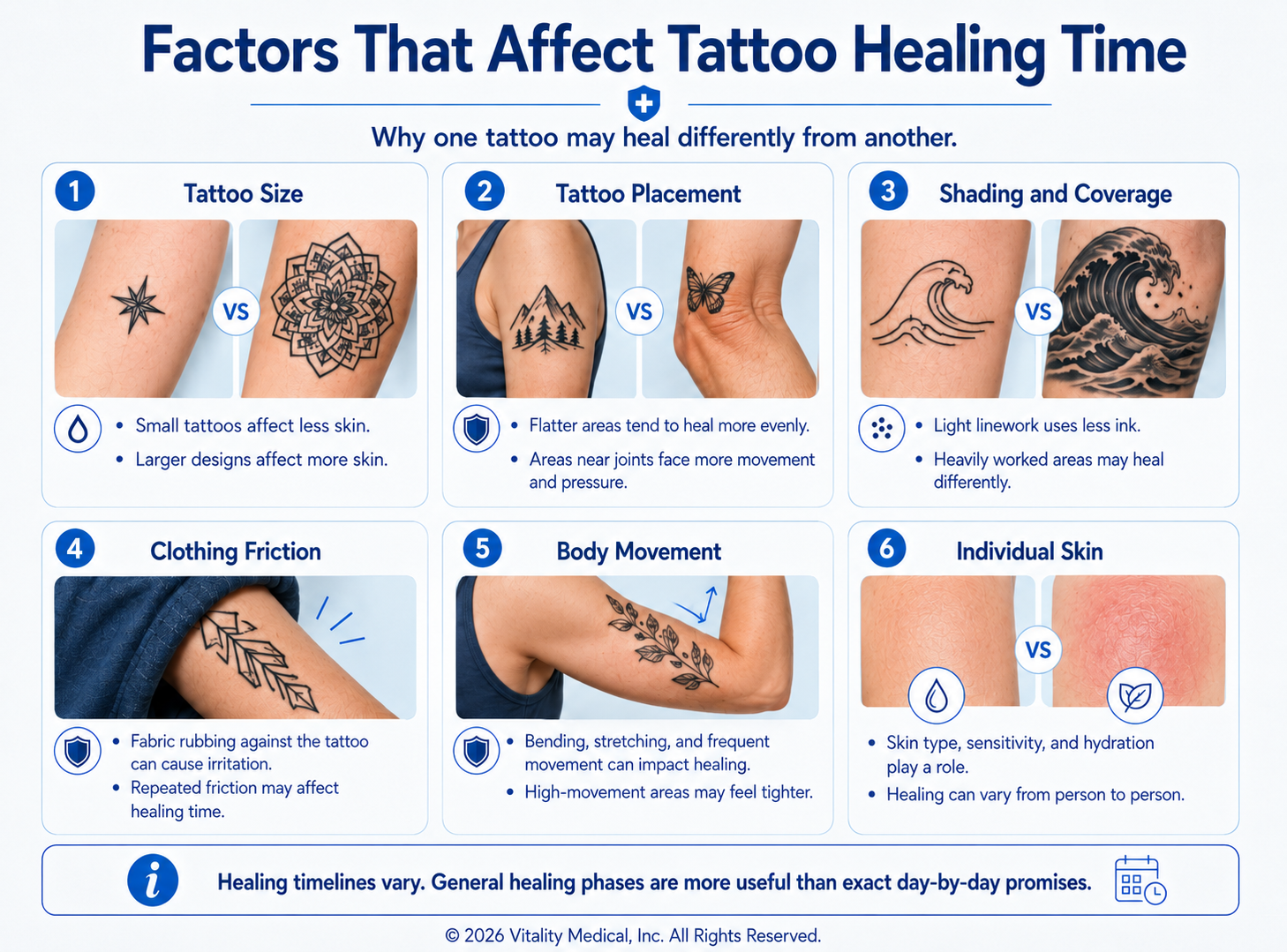
Tattoo healing does not follow one exact calendar schedule. The amount of tattooed skin, body placement, shading, movement, clothing contact, and individual skin characteristics can all influence how the process looks and feels.
Cleveland Clinic notes that tattoo size and location can affect the healing process.2 A small tattoo on a relatively still area may move through visible changes differently from a large design near a joint or underneath clothing.
| Factor | Why It Matters | Possible Effect on Healing |
|---|---|---|
| Tattoo Size | Larger designs affect more skin. | A wider area may feel tender, tight, or dry during recovery. |
| Body Placement | Body areas differ in movement, pressure, and stretching. | Skin near a joint may feel tighter or experience more movement. |
| Shading and Coverage | Heavily shaded areas receive more repeated needle contact. | Different parts of one tattoo may peel or settle at different times. |
| Clothing Friction | Fabric may continually rub or press against the area. | The tattoo may feel more sensitive during movement. |
| Individual Skin | Skin dryness and sensitivity vary between people. | Another person’s tattoo-healing timeline may not match. |
Because these factors overlap, rigid day-by-day promises can be misleading. General changes such as tenderness, drying, peeling, and surface recovery are more useful than expecting every tattoo to reach each stage on the same day.
Temporary Changes in Tattoo Appearance
A tattoo that's healing may temporarily look cloudy, patchy, uneven, or less colorful because dry surface skin remains over the ink. Flakes, light scabs, and changing skin texture can alter how light reflects from the design.
Some parts of the tattoo may become smooth before others. This is especially common when a design contains both lightly lined areas and sections with heavy color or shading.
| Appearance During Healing | Why It May Look That Way | What Should Wait |
|---|---|---|
| Dull or Hazy Ink | Dry or renewing surface skin may cover the design. | Judging final color brightness |
| Patchy-Looking Sections | Some parts may peel or smooth out before others. | Deciding that ink is missing |
| Uneven Texture | Flakes and light scabs may remain over parts of the tattoo. | Planning a touch-up |
The finished result should not be judged while active peeling or scabbing remains. Questions about fading, missing ink, or a touch-up are easier to evaluate after the surface has recovered and the tattoo artist can examine the settled design.
When to Seek Professional Guidance
This article explains changes that may occur during routine tattoo healing. It cannot determine whether a specific tattoo is infected, irritated, allergic, over-moisturized, or reacting to an adhesive or another aftercare product.
The U.S. Food and Drug Administration advises contacting a healthcare professional when there are concerns about tattoo healing or a possible adverse reaction.3 A tattoo artist may clarify the ink, covering, or aftercare method used, but unexpected, worsening, or concerning skin changes require individual medical evaluation.
Bottom Line
A fresh tattoo may progress from mild tenderness, redness, swelling, and clear surface fluid to dryness, peeling, itching, light scabbing, and gradual surface recovery. The timing varies based on the tattoo and the person’s skin.
Allow flakes and light scabs to release naturally, avoid unnecessary scratching or friction, and continue following the tattoo artist’s aftercare instructions. A healthcare professional should evaluate unexpected or worsening reactions rather than relying on photographs, social media posts, or a general healing guide.
Related Guides in This Series
- What Does Normal Tattoo Healing Look Like?
- Second Skin vs. Traditional Tattoo Aftercare
- Is a Healing Tattoo Infected, Irritated, Over-Moisturized, or Reacting to Adhesive?
- Life After a New Tattoo: Showering, Sleeping, Exercise, Swimming, Work, and Sun

Login and Registration Form