
Click a link to jump to the section.
Introduction
Adjusting to a urinary catheter takes time and patience. Daily routines may change around drainage, hygiene, clothing, and activity. Understanding the catheter and drainage system a patient uses is critical to incorporating the device into daily life. Always consult a medical professional with any questions or concerns about proper urinary care.
Understanding Urinary Catheters and Equipment
Indwelling (Foley) Catheters
- Continuously drains the bladder
- Stays in the bladder until it is replaced
Indications
- Urinary retention
- Severe incontinence when clinically indicated
Suprapubic Catheters
- Surgically inserted through the lower abdomen
- May be used for urinary retention or long-term bladder drainage when urethral catheterization is difficult, unsafe, poorly tolerated, or otherwise unsuitable
- Long-term urinary care
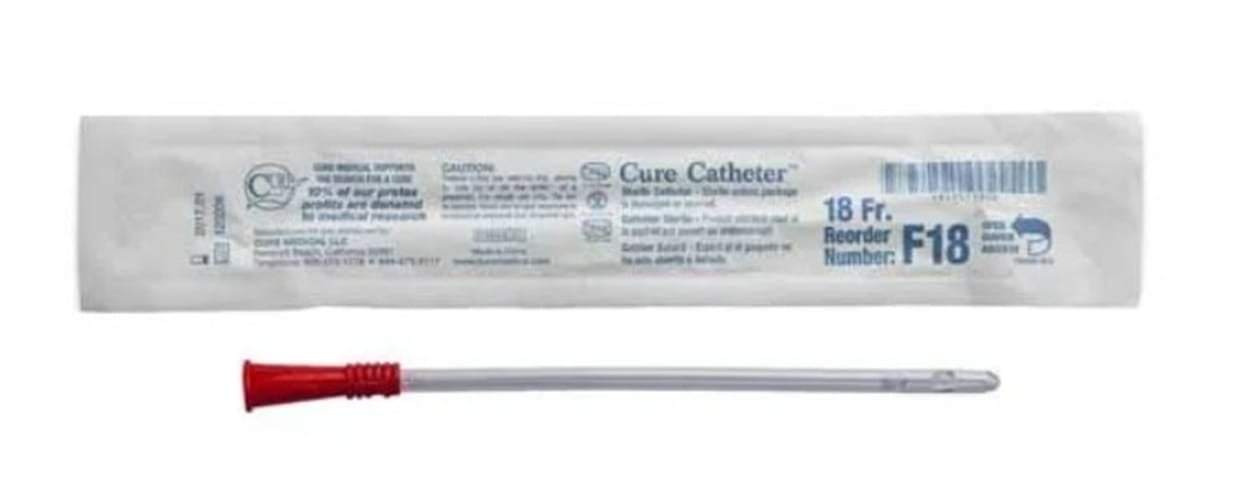
Intermittent Catheters
- A new catheter is inserted and removed for each bladder drainage
- Typically used for self-catheterization
- Drains into a collection bag or toilet
Indications
- Urinary retention
- Overflow incontinence associated with incomplete bladder emptying
External Catheters
- Non-invasive
- Attached outside of the body
- Avoids insertion through the urethra and may reduce urethral trauma compared with an indwelling urethral catheter in appropriate patients
- Male condom catheters
- Female external catheters
Indications
- Urinary incontinence
- Urinary leakage associated with bladder spasms
- Difficulty controlling urinary output
Drainage Bags
- Collect urine from compatible indwelling, suprapubic, or external catheter systems
- Drain into a toilet or appropriate container regularly
- Some drainage bags feature graduated markings to estimate urine volume
3 Types of Collection Bags
Bedside Drainage Bags
- For patients with limited mobility
- Hang on the side of the bed, lower than the catheter for gravitational drainage
- Larger volume than other drainage bags
- For day and nighttime urine collection
- Some bedside drainage bags include a sampling port for aseptic urine collection when testing is required
Belly Urine Collection Bags
- Strap around the user’s waist
- Alternative to leg bags
- For mobile individuals
- Discreet under loose-fitting clothing
Urinary Leg Bags
- Strap to the user’s leg
- Alternative to belly urine collection bags
- For mobile individuals
- Discreet under loose-fitting clothing
Tubing
- Connects the catheter to the urine collection bag
- Available in various lengths and diameters
- Made of silicone, latex, or PVC
- Flexible
- Durable
- Supports urine drainage when properly connected, positioned, and maintained
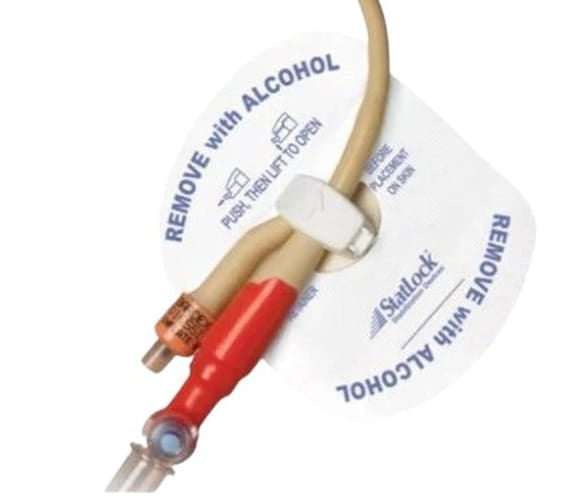
Securement Devices
- Alternative to leg straps
- Anchor the tubing to the user’s body
- Reduce the risk of the catheter tubing snagging, pulling, disconnection, or slipping
Building a Daily Routine
Care routines differ from person to person depending on their catheter type, but a few guidelines remain the same.
When establishing a daily routine, always:
- Wash your hands before and after inserting or removing a catheter
- Carefully follow routine hygiene instructions from a doctor
- Consistently check the catheter’s tubing, drainage bags, and securement equipment throughout the day.
Drainage Bags
When appropriate, use a smaller leg bag during the day. Set up a larger bedside drainage catheter bag at night.
Many patients may be self-conscious about whether or not their catheter equipment will be visible. Use waist or leg straps to secure the catheter bag under loose-fitting clothes.
Use a stabilization device to hold the catheter tubing in place and reduce tugging when moving.
If a catheter leg bag feels heavy, check its fullness. It may be time to drain its contents. Keep urine collection bags below bladder level and empty them regularly.
Replace catheters and drainage bags according to medical instructions and the equipment manufacturer's guidance.
Catheter
Wash the area surrounding the catheter daily with a soapy washcloth. Women should do so after every bowel movement.
Wipe away any crust surrounding the catheter.5
Drainage Tubing and Securement Devices
Monitor urine drainage regularly and note any new problems.5
Keep the catheter and drainage tubing connected as directed. Avoid unnecessary disconnection. If disconnection is required, follow medical instructions for cleaning and reconnecting the system.
Replace the securement device as directed by a medical professional or when the adhesive starts to loosen.
Returning to Everyday Activities
Catheter bags and belly bags can be worn discreetly under loose clothing. This allows users to dress around a leg bag while maintaining proper drainage. Pack extra supplies in case of unexpected delays or supply problems.
Individuals wishing to participate in sports or other forms of exercise may choose to wear pads.5
Those who require a Foley catheter may seek out low-impact activities in an effort to reduce the risk of tubing leaks. A securement device can help hold the tubing closer to the user’s body to reduce the risk of snags and tugs during exercise.
Consult a medical professional with any questions or concerns about intimacy or other activities.
Traveling With a Catheter
Packing Suggestions for Vacationing With a Catheter
- Spare catheter supplies
- Extra underwear and pants
- Wipes
- Hand sanitizer
- A leg mirror
- Plastic bags
- Incontinence pads4
Maintaining a Catheter Routine Away From Home
- Pack catheter supplies in a carry-on bag.
- Research TSA guidelines and ask your doctor to write a note concerning lubricants, hand sanitizer, and other liquid products.
- If traveling by bus, when possible, learn the break schedule and plan your catheterization accordingly.
- For longer journeys, use on-board restrooms if available.4
Leakage, Blockage, and Possible Infection
Colonization vs. Symptomatic Infection
Colonization
- Does not present symptoms
- Excess bacteria in urine
- Biofilms resist antibiotic treatment3
Catheter Infection Symptoms
- Fever when using urinary catheter
- Pelvic pain
- Blood in catheter tubing or drainage bag1
Leakage
Signs of a Leak
- Changes in drainage flow
- Catheter bag stays empty
- Wetness surrounding the catheter tubing
Catheter Leakage Causes
- Clogged/kinked tubing
- Constipation
- Incorrect catheter size
- Improper catheter placement
- Loose tubing connections
- Overflowing drainage bag
- Cracked, worn, or otherwise damaged equipment
Blockage
Signs of a Blockage
- The catheter is not draining
- The catheter is draining more slowly than usual
- Urine is leaking around the catheter
Blockage Causes
- Blood clots
- Bladder stones
- Salt and mineral buildup in the catheter tube (encrustation)2
Preventing Pulling, Kinks, and Drainage Problems
- Arrange the catheter tubing so it doesn’t become twisted or compressed.
- Use securement devices to reduce tugging during normal movement
- Check bag position and visible kinks when urine is not draining normally2
- Ensure that all connections are secure
Seek professional help if any of the following occur:
- Persistent leakage or lack of drainage
- Swelling
- Redness
- Blood in urine
- Changes in urine consistency
- Changes in urine color
- Foul odor
- Vomiting
- Nausea
- Chills
- Fever
- Abdominal pain
- Lower back pain
- Significant discomfort
Avoid self-directed flushing, removal, or adjustment of an internal catheter.
Planning Urinary Catheter Supplies and Ongoing Care
Catheter users may need ongoing replacement supplies, but the type and replacement frequency depend on the catheter system and care plan. Caregiver inventory planning helps reduce the risk of running out of catheter supplies.
- Keep spare catheter bags, securement devices, straps, and other supplies available in case of an emergency or supplier delays.
- Record product sizes, supplier information, and care-team contact information to facilitate reordering items.
- Several of the urinary care products Vitality Medical sells feature an “autoship” option. Customers can select delivery intervals ranging from weekly to semi-annually. Contact our customer support team for assistance.
Conclusion
Although it may take some acclimation, living with a urinary catheter is manageable. Establishing proper hygiene habits and effective supply replacement schedules sets caregivers up for success.
Stay vigilant for signs of tubing obstruction, leaks, or infection. When in doubt, ask your healthcare provider.
Maintain daily catheterization habits even while traveling. Pack extra provisions in case of an emergency. Stay as close to your regular bathroom routine as possible while also adhering to your transportation’s break schedule.
Vitality Medical offers automatic shipments of several urinary care items. Repeated deliveries can be scheduled online. Call our customer service team for assistance.
Footnotes
- 1 Agarwal, P.; Hota, D.; Neniwal, V. K.; Rulaniya, S. K.; Swain, S.; Yadav, P. K."Purple urine bag syndrome: An unusual manifestation of urinary tract infection, our experience at a tertiary care center" National Library of Medicine, 2 August 2022. Accessed 18 August 2026.
- 2 Fosnight, Aleece. "How to Avoid Catheter Blockages & Obstructions" Aeroflow Urology, 1 March 2024. Accessed 17 August 2026.
- 3 Centers for Disease Control and Prevention. (n.d.). Indwelling urinary catheter culture stewardship: Overview. Centers for Disease Control and Prevention. https://www.cdc.gov/uti/hcp/clinical-guidance/index.html
- 4 Guide To Traveling With Intermittent Catheters. coloplast.us. (n.d.). https://www.coloplast.us/Global/US/Continence/Travel/USCC_IC%20Travel%20Guide%20Brochure_PM-27551.pdf
- 5 Exercise for Catheter Users. coloplast.ca (n.d.). https://www.coloplast.ca/Global/Canada/Continence/Exercise%20for%20IC%20Users.pdf;
- 6 Northwestern Memorial Hospital Urology Department and Urology Nursing. (n.d.). Patient Education and Care Treatment: Indwelling Urinary Catheter. Retrieved November 20, 2026.

Login and Registration Form