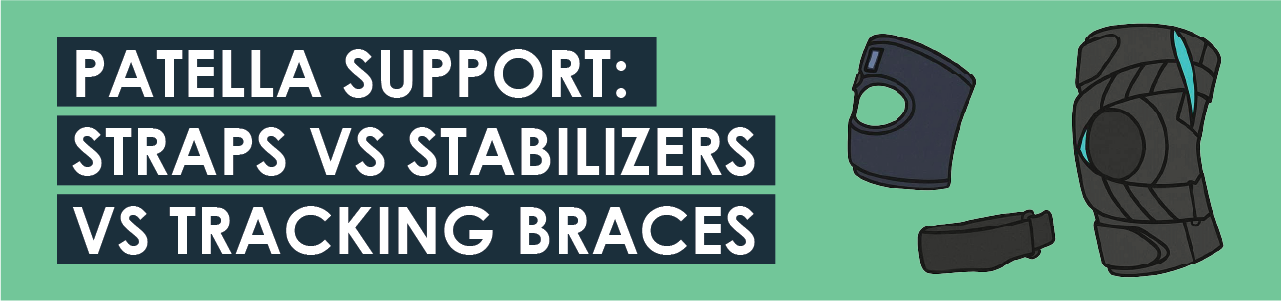
TLDR: “Patella support” covers several different brace designs, not just one product type. Patella straps focus pressure below the kneecap, open-patella sleeves and stabilizers use cutouts and buttress rings around the kneecap, and tracking braces combine straps, pads, and sometimes hinges to guide how the kneecap moves. Many returns happen when a simple strap is used for problems that need a stabilizer or tracking design instead, or when placement and tightness are not checked with a basic fit checklist.
Patella support is one of the most common requests in knee bracing. Many shoppers describe “kneecap support” or “patella support” without realizing that this broad label includes several different designs. Each design applies pressure in a different way around the front of the knee.
Returns often come from a mismatch between the complaint and the brace style. A patella strap may be ordered when a stabilizer with a buttress ring would match the problem better. A tracking brace may be needed when the kneecap feels like it moves sideways, but a basic sleeve is chosen instead. Clear language about what each design is built to do can reduce trial-and-error purchases.
This article focuses on patella straps, open-patella sleeves, stabilizers with buttress rings, and tracking braces. It uses plain terms, real-world pain points, and a buying checklist to help connect common kneecap complaints to design features, fit checks, and situations where clinician input is appropriate.
Plain-Language Explanation of Patella-Focused Designs
Patella-focused braces are designed around the front of the knee, or anterior knee region. They differ mainly in where pressure is applied and how much of the joint is covered.
Patella straps sit below the kneecap and apply focused pressure over the patellar tendon. These single-band designs are often described as patella knee straps, patellar tendon straps, or jumper’s knee straps. They do not cover the entire joint and do not include hinges.
Open-patella sleeves are pull-on sleeves with a cutout at the kneecap. The sleeve provides compression around the joint, while the open patella area reduces direct pressure on the kneecap. Some models add light side stays or textured knit around the opening.
Patella stabilizers with buttress rings use pads or rings that surround the kneecap. These buttress rings may be donut-shaped, C-shaped, or horseshoe-shaped. The goal is to support the kneecap from the sides and help guide movement without fully locking it in place.
Tracking braces combine straps, buttress pads, and sometimes hinges to influence how the kneecap moves in its groove as the knee bends and straightens. These braces often have left- or right-specific versions and more complex strap patterns that pull the kneecap in a particular direction.
Real-World Pain Points and Fixes
- “Patella support” described as a single product: many shoppers assume there is one standard patella brace. In practice, patella straps, open-patella sleeves, stabilizers, and tracking braces all fall under this label, which can lead to mismatched expectations.
- Strap bought when a stabilizer was needed: a simple strap may help tendon-focused complaints but may not feel stable enough when the kneecap feels like it shifts or moves. In those cases, a buttress stabilizer or tracking brace is often a closer match.
- Stabilizer bought when a low-profile strap was expected: a patella stabilizer with a ring can feel bulkier under clothing than a single strap. Shoppers who expected a slim band may describe the sleeve as too warm or thick for certain activities.
Patella Straps
Patella straps are narrow bands that wrap around the leg just below the kneecap. They are designed to apply focused pressure to the patellar tendon region, not to brace the entire knee. Many models use a single strap with hook-and-loop closure, sometimes with a small padded area that rests over the tendon.
In practical terms, patella straps are often chosen when symptoms are described at or just below the kneecap during running, jumping, or similar activities. The strap does not control side-to-side motion and does not include hinges, so it is usually considered a low-profile option rather than a full joint support.
Real-World Pain Points and Fixes
- Over-tightening and circulation complaints: patella straps are small, so it can be easy to over-tighten. Signs of excessive tightness include numbness, tingling, color change below the strap, or a feeling that the strap is cutting into the skin. A two-finger check under the strap can help confirm that tension is firm but not restrictive.
- Sliding during activity: a strap that sits too low on the shin or too far from the kneecap can slide or twist. Placing the strap just below the kneecap, across the patellar tendon region, and checking that the pad rests over the tendon can reduce movement. If sliding continues, leg shape and strap length may need to be reassessed.
Most Asked Questions
Where should a patella strap sit?
A patella strap usually sits a short distance below the kneecap, across the patellar tendon. The strap should not rest directly on the kneecap itself and should not be placed far down the shin. Centering any built-in pad under the kneecap, over the tendon, helps maintain contact during bending.
How tight is safe for a patella strap?
The strap should feel snug and secure without causing numbness, tingling, or discoloration below the band. A simple check is whether fingers can slide under the strap with mild resistance. If there is sharp pressure, pain, or circulation change, the strap is likely too tight and should be loosened or repositioned.
Open-Patella Sleeves and Buttress Stabilizers
Open-patella sleeves are compression sleeves with a kneecap cutout. The design keeps compression around the joint while leaving the kneecap uncovered. Some versions stay simple, while others add a buttress ring or pad around the opening to function as a patella stabilizer.
Buttress stabilizers use rings or shaped pads to surround the kneecap from one or more sides. Common designs include donut buttresses that circle the kneecap and C- or horseshoe-shaped pads that support one side more than the other. These features are built to support kneecap position during movement without fully restricting motion.
Real-World Pain Points and Fixes
- Edge irritation around the cutout: rubbing at the edge of an open-patella cutout often comes from misplacement. If the opening sits too high or low, the edge can press on the kneecap with each step. Centering the opening over the kneecap and smoothing wrinkles can reduce friction.
- Bulk under clothing: buttress rings and pads add thickness at the front of the knee. This bulk can print under slim pants or catch on fabric. Choosing clothing with a slightly wider knee area or using softer, stretch fabrics can improve comfort.
- Sleeve rolling when the ring is mispositioned: when the buttress ring sits too low or when the sleeve is too short, the material may roll at the top or bottom. Checking full-length size, as well as knee, thigh, and calf measurements, can reduce rolling and keep the ring aligned with the kneecap.
Most Asked Questions and Answers
What does “open patella” mean?
“Open patella” describes a sleeve with a circular or shaped opening over the kneecap. The design reduces direct pressure on the kneecap while still applying compression around the joint. The opening should sit directly over the kneecap, not above or below it.
What does a buttress ring do?
A buttress ring or pad sits around part or all of the kneecap. It is designed to contact the tissues around the kneecap and provide gentle support to help control movement. It does not lock the kneecap in place, but it can change how pressure is distributed during walking, stairs, or sports.
Patella Tracking Braces
In this context, “tracking” refers to how the kneecap moves in its groove at the end of the thighbone as the knee bends and straightens. Tracking braces use straps, pads, and sometimes hinges to guide that motion without promising to treat specific conditions.
Tracking designs often rely on directional pull. Straps may be anchored on one side of the leg and drawn across the kneecap toward the other side. A lateral pull system, medial buttress pad, or hinged frame may be used to help support the kneecap’s path during activity.
Real-World Pain Points and Fixes
- Confusion about left versus right orientation: some tracking braces are labeled for left or right legs because the pull direction or buttress position is different. Wearing a left brace on the right leg, or the reverse, can reduce support and increase discomfort. Checking orientation labels is an important first step.
- Fit issues with hinges and straps: tracking braces that include hinges rely on correct hinge height and strap routing. Hinges placed too high, too low, or too far forward can cause rubbing and pinching, especially on stairs. Following manufacturer diagrams for hinge height and strap order can improve comfort.
- Discomfort on stairs when placement is off: tracking braces are often used during stair use and sports. If the kneecap feels more uncomfortable on stairs after applying the brace, placement, strap tension, or orientation may need to be reassessed, and clinician guidance may be appropriate.
Most Asked Questions and Answers
What does “patellar tracking” mean in a brace description?
In brace descriptions, “patellar tracking” usually means the brace is designed to influence how the kneecap moves in its groove during bending and straightening. Straps and buttress pads are arranged to guide the kneecap in a more controlled path without claiming to correct bone structure or replace clinical treatment.
Why do some tracking braces have left- and right-specific versions?
Left- and right-specific versions appear when the brace applies a directional pull. For example, a brace may pull the kneecap toward one side using a lateral pull system or medial buttress pad. Wearing the brace on the wrong leg reverses the pull direction and can reduce the intended support.
Scenario Map: Common Patella Problems and Design Options
Shoppers often describe kneecap problems in plain language instead of technical terms. Mapping these descriptions to general design options can narrow choices before a purchase. The table below summarizes common complaint patterns, what many shoppers look for, and fit warnings that may call for clinician input.
| How the Problem Is Described | Designs Often Considered | Fit and Safety Warnings |
|---|---|---|
| “Kneecap feels like it moves” | Patella stabilizers with buttress rings, tracking braces with directional pull | Feelings of the kneecap shifting, locking, or giving way can reflect underlying joint issues. Clinician input is important when instability is frequent or severe. |
| “Pain on stairs or squatting at the front of the knee” | Open-patella sleeves, patella stabilizers, tracking braces | New or worsening pain with weight-bearing should be discussed with a clinician, especially if swelling, catching, or locking is present. |
| “Needs support for sports with running and jumping” | Patella straps, open-patella sleeves, lighter stabilizers; sometimes tracking braces for higher-demand play | Sports use adds repeated impact and directional changes. Fit checks should include sport-specific movements, and safety guidance from a clinician or athletic trainer is important for return-to-sport decisions. |
| “Front-of-knee discomfort with longer walks or standing” | Open-patella sleeves, low-profile stabilizers | Any new swelling, warmth, or sudden change in symptoms should be reviewed with a clinician, even when a brace is used. |
Buying Checklist for Patella Support
A short buying checklist can help evaluate patella support options before and after purchase. This checklist does not replace clinical guidance but can organize basic fit and comfort checks.
- ✓ Placement and sizing: confirm that the brace size matches the measurements listed on the sizing chart and that cutouts, pads, or straps sit at the landmarks shown in the instructions. Patella openings and rings should center around the kneecap, and straps should follow the illustrated path.
- ✓ Strap comfort and skin checks: check for strap edges that cut into the skin, exposed hook-and-loop material that scratches, or red marks that do not fade after removal. Circulation checks should include watching for numbness, tingling, or color change in the leg or foot.
- ✓ Short movement trial: test fit during a short walk, stair use if safe, and basic daily movements. Sliding, twisting, or increased kneecap discomfort during this trial may signal a need to adjust placement, strap order, or design.
- ✓ Clothing and daily routine: confirm that the brace fits under typical clothing and behaves acceptably during common tasks such as sitting, driving, and standing. Bulk or rubbing in daily environments can affect long-term wearability.
- ✓ When clinician input is appropriate: clinician guidance is important when kneecap symptoms include frequent giving way, locking, large or sudden swelling, visible deformity, or persistent pain that limits walking or daily tasks.

Login and Registration Form