Quick Summary:
Standard manual and electric wheelchairs are both designed to assist those with limited lower-body mobility. However, they have key differences and advantages that are important to know before purchasing a wheelchair.
Click a link to jump to a section.
Introduction
Choosing the right wheelchair makes all the difference in comfort and independence, and the first step is deciding between a manual or an electric wheelchair. Manual and electric wheelchairs are both helpful mobility aids, but one may serve you better than the other depending on your lifestyle and mobility needs.
This blog is a wheelchair comparison guide highlighting the features and advantages of both chairs, so you can make an informed choice on which wheelchair will work best for you.
1. Understanding Wheelchair Types
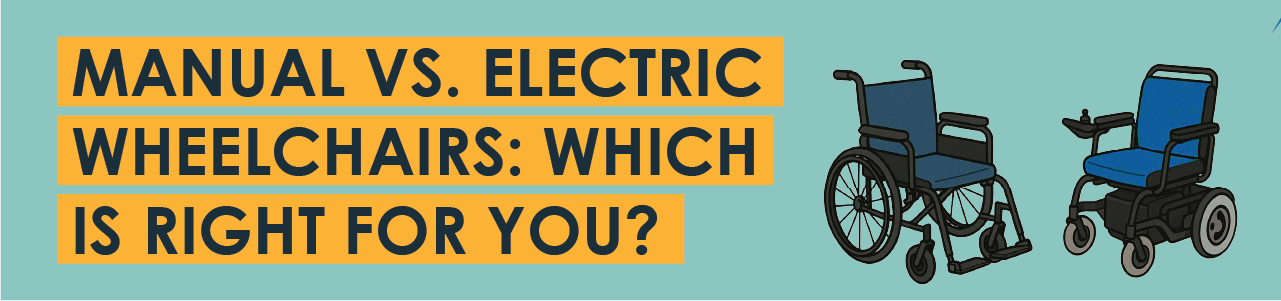
Manual Wheelchairs
Manual wheelchairs are designed to be self-propelled or pushed by a companion. Manual wheelchairs may be suitable for users with upper-body strength to propel them or for those with caregiver assistance.
Electric Wheelchairs
Electric wheelchairs (also known as power wheelchairs) are battery-powered devices usually operated with a joystick. Electric wheelchairs are suited for those with limited body strength and mobility.
Both manual and electric wheelchairs are designed to support you; however, one type might be a better choice than the other depending on your needs and circumstances.
2. Advantages of Manual Wheelchairs
- Lightweight Frame:
Manual wheelchairs don't have batteries or other heavy equipment, so they are generally lighter than power wheelchairs and may even be foldable for easier transport. Their lightweight frame is easy to move and reposition as needed. - Less Maintenance:
No motors, batteries, or electronics means manual wheelchairs require minimal maintenance. - Upper Body Engagement:
A self-propelled wheelchair can provide some light exercise. Users often like that even when spending time in their wheelchairs, they can still do some physical activity. However, it can cause physical strain from extended use. - Easier to Maneuver:
Manual wheelchairs often feature a more compact and lightweight design, enabling users to better navigate tight spaces and corners. Some users prefer the tactile feedback from manual wheelchairs, as they can better feel the surface beneath them and make the chair easier to control. - More Cost-Effective:
Manual wheelchairs are generally more affordable because of their simpler design.

3. Advantages of Electric Wheelchairs

- Reduces Physical Strain:
Electric wheelchairs don't require self-propelling, making them a great choice for users with limited upper-body mobility or fatigue problems. - Adjustable Features:
Electric wheelchairs often include advanced comfort features, such as seat adjustments, tilting, and reclining. - Suited for Various Terrains:
Electric wheelchairs are designed to handle more than smooth indoor surfaces; many models are designed to navigate rougher outdoor terrains. - Great for Long-Distance:
Powered wheelchairs give users more independence and freedom to explore, as they can go long distances without requiring any physical exertion.
4. Comparing Maintenance and Durability
Manual Wheelchair Maintenance
Manual wheelchairs require less maintenance than electric wheelchairs, but they still require regular maintenance and inspection. Common wheelchair parts that need periodic inspection include, but are not limited to:
- Tires
- Brakes
- Rear wheels
- Caster wheels
- Frame
- Cushion
Electric Wheelchair Maintenance
Electric wheelchairs have more components than a traditional manual wheelchair and require more maintenance and inspection. An electric wheelchair maintenance checklist includes, but is not limited to, the following:
- Controller or joystick
- Battery and charger
- Foot, arm, and leg supports
- Wiring and electronic connections
- Braking system
- Motor
- Suspension
Electric wheelchairs need more intensive maintenance. They may even need professional maintenance for more advanced electrical components. They may be more durable and heavyweight than manual wheelchairs, but their maintenance costs are higher. However, wheelchair lifespans, whether manual or electric, depend on how well they're maintained.
5. Cost, Portability, and Accessibility
Manual wheelchair models are generally more affordable than power models, as power wheelchairs vary in advanced features, battery range, and design. Manual wheelchairs can start in the hundreds and go over $1000, while power wheelchairs can reach $8000 or more. Actual costs can vary widely depending on the model, frame type, seating options, customization options, and more.
Many users find manual wheelchairs more portable and easier to transport. Many manual wheelchairs fold to a compact size and are usually lightweight enough for users or their loved ones to lift and pack in a car trunk.
Electric wheelchairs may be less portable, but many models can handle longer distances outdoors and uneven terrains. They also require little to no physical effort to drive around, but they may require vehicle lifts or ramps to transport in a car or access buildings.
6. Choosing Based on Lifestyle and Health Needs
Consider your lifestyle and your unique needs before choosing a manual or electric wheelchair. Do you only require a wheelchair part-time or just for a recovery period? Can you walk short distances unassisted and have good upper-body mobility? A manual wheelchair may be right for you.
And what about electric wheelchairs? An electric wheelchair may be the choice for you if you require a wheelchair full-time, have limited strength, chronic fatigue, or overall limited upper-body mobility.
7. Combining Both for Versatility
Many users benefit from having both a manual and an electric wheelchair, but it depends on their budget, transport, storage, and lifestyle needs.

Manual wheelchairs are great for short trips and outings, as they can be easily lifted into a car and navigate tight spaces. An electric wheelchair makes up the rest, as it can easily handle the outdoors and long distances. However, having more than one wheelchair can become too expensive, or your home may not be able to accommodate two wheelchairs, so it is not always the best option for everyone.
Conclusion
Manual and electric wheelchairs each have unique advantages and are designed to accommodate different mobility levels. Depending on your lifestyle and mobility needs, one or both chairs can provide you with the support, independence, and comfort you need to enjoy your life to the fullest.
Vitality Medical is a reliable source for wheelchairs and wheelchair accessories. Shop our selection of wheelchairs from popular manufacturers and find the wheelchair that best fits you today.

Login and Registration Form